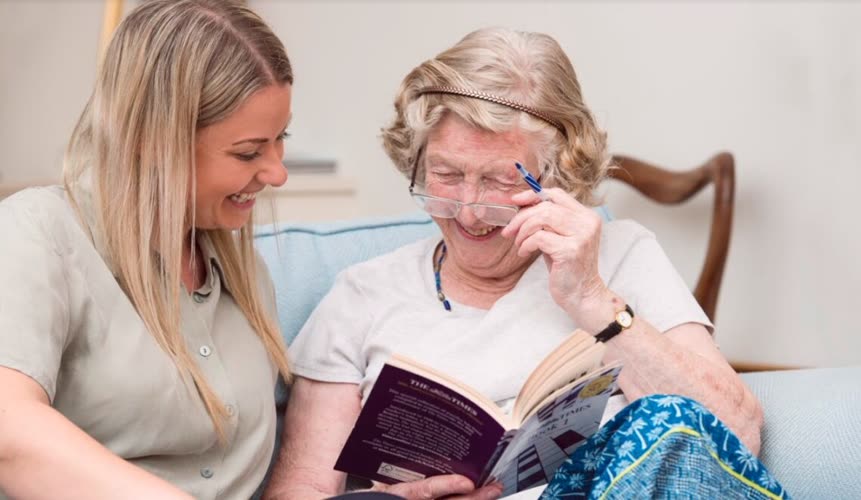
The first weeks after a knee or hip replacement are when you most need help, and most want to be at home. A live-in carer supports safe movement, your physiotherapy exercises, personal care and meals, so recovery goes smoothly.
Typically 2–6 weeksShort-term care while you regain independence
From £1,200 a weekOne fixed weekly fee
Ready for discharge dayCarer in place when you come home
Physio every dayExercises done properly, not skipped
What is care after a joint replacement?
Knee and hip replacements are among the most common operations in the UK. Most people go home within a few days, but full recovery takes weeks to months. In the early weeks, walking needs crutches or a frame, bending and getting in and out of bed or the bath can be difficult, and daily exercises are essential for a good result.
Post-operative care at home gives the practical help needed during that period. Short-term live-in care means a carer is there from the day you come home, including at night when getting to the toilet safely matters most.
Safe movement and precautions after joint surgery
Safe movement — walking with crutches or a frame, getting in and out of bed, chairs and the car, and managing stairs as the physiotherapist has shown.
Following precautions — any movement precautions your surgeon or physiotherapist has given, especially in the first weeks after a hip replacement.
Physiotherapy exercises — encouraging and supporting the exercise programme every day, which is key to getting movement back.
Personal care — washing and dressing, using aids such as long-handled reachers and sock aids, and keeping the wound dry and clean.
Pain relief — making sure pain medication is taken on time, especially before exercise.
Meals and housework — cooking, cleaning, laundry and shopping while you cannot stand for long or carry things.
Watching for problems — reporting signs such as increasing redness, heat or discharge at the wound, a high temperature, or calf pain and swelling, which need prompt medical advice.
Preparing your home before surgery
A little preparation makes the first weeks much easier: a firm chair with arms at the right height, a clear route through the house, a raised toilet seat or frame if advised, and a bed downstairs if the stairs will be difficult. The hospital's occupational therapist often arranges equipment. We can have the carer arrive before you come home so everything is ready.
How long will I need care?
Most people need live-in help for between two and six weeks after a knee or hip replacement, depending on their age, general health and whether they live alone. Care can be extended week by week if recovery is slower, or ended early if things go well. For people who were already frail or have other conditions, longer support may help them get back to full independence.
Paying for post-operative care
Live-in care after surgery starts from £1,200 a week. After a hospital stay, the council may offer a short period of free reablement, and some private health insurance policies contribute to aftercare. See our short-term live-in care guide.
Knee replacement and hip replacement: how recovery differs
Although often grouped together, the two operations have different recoveries:
Hip replacement — many people walk with a frame or crutches soon after surgery. Depending on the surgical approach, there may be precautions for the first weeks, such as avoiding bending the hip too far or crossing the legs. Getting in and out of bed, chairs and the car safely is the main challenge.
Knee replacement — recovery is often more painful at first, and regaining movement in the knee depends heavily on doing the exercises. Swelling and stiffness can last for weeks, and pain relief before exercise is especially important.
Your surgeon and physiotherapist will give you specific advice, which always takes priority. A carer helps you follow it every day.
Managing pain and swelling
Good pain control is not just about comfort; it makes the exercises possible, and the exercises are what make the new joint work well. Carers make sure pain relief is taken on time, especially before exercise sessions, and help with measures such as elevating the leg and using cold packs as advised by the hospital. Pain that is getting worse rather than better, or is not controlled by prescribed medication, should be discussed with the GP or surgical team.
Sleep after joint replacement
Sleep is often disrupted after joint replacement surgery, by discomfort, restricted positions and the need to get up in the night. Getting to the toilet safely at night, while still unsteady, is one of the riskier moments of recovery. A live-in carer is there at night to help, and can help with positioning pillows as advised to make sleeping more comfortable.
Getting back to normal life
As recovery progresses, the focus moves to everyday activities: walking outside, managing stairs, going shopping, returning to hobbies and, when the surgeon agrees, driving. A carer supports each step, gradually doing less as confidence and strength return. The aim is always to make the carer unnecessary as quickly as recovery allows.
Equipment that makes recovery easier
The hospital occupational therapist usually arranges some equipment before discharge, and having it in place makes the first weeks much easier. Common items include a raised toilet seat or toilet frame, a perching stool for the kitchen, chair raisers to bring a favourite chair to a safe height, a long-handled reacher, a sock aid, long-handled sponges and a bed lever. A carer makes sure equipment is set up correctly and used safely, and helps return it once it is no longer needed.
Warning signs after joint replacement surgery
Most recoveries go smoothly, but it is important to know the signs of complications and to follow the hospital's advice on preventing blood clots, which may include medication or stockings. Contact the surgical team, GP or NHS 111 promptly if there is increasing pain, redness, heat, swelling or discharge from the wound, a high temperature, or pain, swelling or tenderness in the calf. Chest pain or sudden breathlessness needs a 999 call. A carer who sees the person every day is well placed to notice these signs early.
Managing stairs after surgery
Physiotherapists usually teach a simple rule for stairs after joint replacement: go up with the good leg first, and down with the operated leg first, using a handrail and crutch as shown. A carer stays alongside until the person is confident, which reduces the risk of a fall in the early weeks.
Written by the Live-in Care Direct care team.
Last reviewed .
The highest fall risk after a knee or hip replacement is in the first fortnight, when the joint is weak but the urge to "just get up and manage" is strong. A carer means nobody attempts the stairs or the bath alone.
The exercise programme actually happens
Physio only works if the prescribed movements are done daily, not just at appointments. A carer can prompt, encourage and time them, which is usually the difference between a smooth recovery and a stiff one.
Discharge does not have to wait for a spare room to become available
Hospitals often want a bed freed up quickly. Live-in care can be arranged to start the day someone comes home, rather than delaying discharge or accepting a rushed handover.
Weight-bearing rules are actually followed
Surgeons give specific instructions on how much weight to put through the new joint, and it is easy to bend these rules out of impatience. A carer helps someone stick to them without feeling nagged by family.
Independence comes back on schedule
The carer helps only where the joint restricts them, so the person keeps doing everything else themselves — which is exactly what protects strength and confidence during rehab.
Is it right for us?
When people arrange care after joint replacement
If one of these sounds familiar, post-operative care at home is worth a conversation.
A discharge date has been set with only a few days' notice
Hospitals rarely give much warning. We can often have a carer ready to receive someone at home within 24 to 48 hours.
They live alone with stairs and no family nearby
Getting to the bathroom or the bedroom safely on a new joint, unaided, is exactly the situation that leads to a second admission.
A partner cannot physically help with transfers
Getting someone in and out of a chair or bed safely after surgery takes technique and some strength. Where a spouse cannot manage it, a trained carer can.
There has already been a fall since the operation
One near-miss or fall on a new joint is usually the point families decide waiting any longer is not worth the risk.
Recovery has plateaued because the exercises are not being done properly
Without daily prompting, it is easy to skip the physio routine. A carer keeps it going so progress does not stall.
What a carer does
How a live-in carer helps you recover
Every care plan is built from these, weighted to whatever matters most in your household.
Personal care within movement limits
Washing, dressing and bathing adapted to whatever the surgeon's restrictions are on bending, twisting or weight-bearing.
Mobility and fall prevention
Steady support on stairs and around the home, and encouragement to use walking aids correctly rather than skip them.
Company through a slow recovery
Weeks of restricted movement can feel isolating. A carer keeps conversation, routine and morale going.
Household and appointment support
Meals, laundry, shopping and getting to physio and check-ups, so recovery is not slowed by everyday chores.
Related services
Other types of live-in care we arrange
Live-in care is not one fixed thing. These are the variations families most often need —
and we will tell you which one actually fits.
What post-operative care includes, and what it doesn't
Being straight about the boundaries saves everyone a difficult conversation later.
Included in the weekly fee
Personal care adapted to hip or knee movement restrictions
Medication prompting and administration, including pain relief timing
Support with prescribed physiotherapy exercises
Getting to and from physio and follow-up appointments
Safe help with stairs, bathing and transfers within single-carer limits
Meal preparation and light housework while mobility is limited
Laundry and changing beds
Companionship through what can be a slow, frustrating recovery
Not included
Nursing tasks requiring a registered nurse — wound checks and dressing changes stay with the district nurse
The carer's own food — the household provides everyday meals
Household bills, rent or council tax on the carer's behalf
Two-person or hoist transfers, where a fall or complication requires it (that is our Advanced plan)
Compared honestly
Recovery at home, a care home, or visiting carers?
The three realistic options, side by side. We will tell you if one of the others suits you better.
Live-in care
Residential care home
Visiting care
Typical weekly cost, one person
From £1,200
£1,100 – £1,600
£300 – £900
Typical weekly cost, a couple
From £1,200 (one carer)
£2,200 – £3,200 (two places)
Varies by hours
Staff-to-person ratio
One-to-one
Shared across residents
One-to-one, but only during visits
Same carer each day
Yes
No — shift rota
Rarely
Stay in your own home
Yes
No
Yes
Overnight cover
Yes
Yes
No — unless booked separately
Couples stay together
Yes
Often not possible
Yes
Pets can stay
Yes
Almost never
Yes
Visitors any time
Yes
Visiting hours
Yes
Care home figures are typical UK ranges for 2026 and vary considerably by region and by whether nursing care is included. We quote our own prices exactly; always confirm a care home's fees directly with them.
The single biggest worry families raise, and rightly. You choose the carer from matched
profiles, and you can speak to them by video call before deciding anything.
Enhanced DBSOn every single carer, checked before introduction
In personEvery carer is interviewed, not just screened on paper
You chooseProfiles sent to you — including a video call first
Our carers are spread across the UK, supported by regional care managers. Every one is interviewed in person, enhanced DBS checked and reference-checked before they are ever introduced to a family — and you choose who moves in.
Interviewed face to face, never hired on paperwork alone
How long will I need care after a hip replacement?+
Most people need live-in help for two to six weeks, depending on age, health and whether they live alone. Care can be extended or ended early as recovery allows.
How much does care after knee replacement cost?+
Live-in care after surgery starts from £1,200 a week as one fixed weekly fee.
Can the carer be there when I leave hospital?+
Yes. We can have the carer arrive before you come home so the house is ready, or meet you at the hospital on discharge day.
Will the carer help with my physio exercises?+
Yes. Carers encourage and support the exercises set by your physiotherapist every day, which is key to a good recovery.
What signs of complications should we watch for?+
Increasing redness, heat or discharge at the wound, a high temperature, or pain and swelling in the calf all need prompt medical advice.
Is care after surgery funded?+
Short-term reablement may be free after a hospital stay, and some private health insurance covers aftercare. Otherwise it is usually arranged privately.
Is recovery harder after a knee or a hip replacement?+
Knee replacement recovery is often more painful at first and depends heavily on exercises, while hip replacement may involve movement precautions. Your surgeon and physiotherapist will advise on your own recovery.
When can I drive after a hip or knee replacement?+
Only when your surgeon agrees you can safely control the car, often several weeks after surgery. Check with your insurer too. A carer can help with transport until then.
How can I sleep better after joint replacement?+
Take pain relief as advised, use pillows for positioning as the hospital recommends, and have help available for getting up at night. Sleep usually improves as recovery progresses.
Why is pain relief before physio exercises important?+
Good pain control makes the exercises possible, and the exercises are what restore movement in the new joint. Taking pain relief at the right time before exercising helps recovery.
Transparent pricing
How much post-operative care costs
One weekly fee covering the agreed care plan. No hidden charges for everyday care.
Standard
£1,200per week, one person
About £171 a day, including overnight
Loved ones who need support around the house, including household tasks and companionship.
Most popular
Specialist
£1,300per week, one person
About £186 a day, including overnight
Loved ones needing more personal support, especially overnight, or those living with dementia.
Advanced
£2,600per week, two carers
About £371 a day, including overnight
Loved ones needing continuous specialist support day and night.