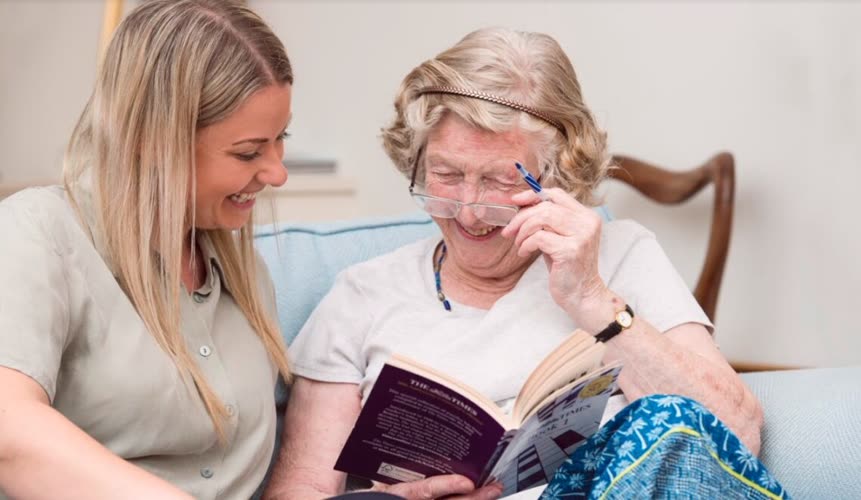
Fewer falls
A carer on hand for every transfer, every trip to the bathroom and every walk to the kitchen removes most of the moments where falls happen.
✧ Our services
Frailty and poor mobility make everyday life riskier: a fall, a missed meal or a chest infection can quickly lead to hospital. A live-in carer helps with safe movement, good nutrition and strength, so your relative stays well and confident at home.

Frailty is a loss of physical reserve that makes someone more vulnerable to sudden changes in health. A frail older person may be slower, weaker and more tired than before, and a minor event, such as a fall, an infection or a new medicine, can have a big effect. Frailty is not an inevitable part of ageing, and with the right support it can often be slowed or even partly reversed.
Mobility and frailty care at home gives practical help to move safely, stay strong, eat well and avoid the setbacks that lead to hospital. With live-in care, someone is always in the house, which is the single biggest reassurance for families worried about falls.
An occupational therapist can assess the home and recommend equipment such as grab rails, raised toilet seats, perching stools, riser-recliner chairs, stairlifts or a profiling bed. Many small items are provided free by the council after an assessment, and larger adaptations may be funded by a Disabled Facilities Grant. A live-in carer makes sure equipment is used safely and correctly every day.
For frail older people, a stay in hospital can itself lead to a loss of strength and independence. A carer who knows the person's normal notices early signs of trouble, such as a urine infection, dehydration, a change in confusion or a chest infection, and contacts the GP before it becomes an emergency. That early action is one of the most valuable things live-in care provides.
Live-in care starts from £1,200 a week. Attendance Allowance, council support after a needs assessment, free equipment and Disabled Facilities Grants can all help. See our funding guide.
Frailty often creeps up slowly, and families may only notice it after a fall or a hospital stay. Early signs worth noticing include:
If you notice these, it is worth asking the GP for a review. Frailty identified early can often be slowed, and sometimes partly reversed.
Weight loss and poor nutrition are both causes and consequences of frailty. Older people may eat less because of low appetite, loneliness, dental problems, difficulty cooking or not bothering to cook for one. Carers help by cooking regular, nourishing meals, offering snacks between meals, making sure there is enough protein to help maintain muscle, keeping drinks within reach, and eating together, which on its own often improves appetite. If weight keeps falling, the GP can refer to a dietitian.
Many older people take several medicines, and some can cause dizziness, drowsiness or low blood pressure on standing, all of which increase the risk of falls. A medication review with the GP or pharmacist can identify medicines that could be reduced or stopped. Carers help by noticing side effects, such as dizziness after taking tablets, and bringing them to the GP's attention.
The single most effective way to maintain strength and mobility is to keep moving. That does not mean strenuous exercise; it means standing up regularly, walking around the house and garden, and doing simple exercises set by a physiotherapist or falls service. A carer encourages movement throughout the day, makes it safe, and helps people keep doing the everyday tasks that naturally keep them active.
Older people often drink less than they need, because thirst weakens with age, because they want to avoid trips to the toilet, or because getting a drink is an effort. Dehydration can cause confusion, dizziness, constipation, urine infections and falls, all of which make frailty worse. Carers help by offering drinks regularly throughout the day, keeping a favourite cup within reach, including foods with a high water content such as soups, fruit and jelly, and keeping an eye on signs of dehydration such as dark urine, dry mouth or new confusion.
Many areas have an NHS falls prevention service, which the GP can refer to. A falls assessment typically looks at strength and balance, walking, eyesight, blood pressure, medicines, feet and footwear, continence and the home environment, and may lead to a strength and balance programme, equipment, a medication review or other treatment. It is well worth asking for a referral after a fall or near-miss. A live-in carer then helps put the recommendations into practice day by day.
After a fall, even without injury, it is worth telling the GP, as the fall may point to a treatable cause such as an infection, low blood pressure or a medicine side effect. The weeks afterwards are a time to rebuild strength and confidence gradually, with support, rather than to stop moving.
Why families choose it
A carer on hand for every transfer, every trip to the bathroom and every walk to the kitchen removes most of the moments where falls happen.
Frailty often gets worse simply because people stop moving out of fear of falling. Gentle encouragement to keep walking and standing helps slow that decline.
Falls and their complications are one of the most common reasons frail older people end up in hospital. Consistent support at home reduces that risk.
Support is given only where it's needed — a steadying hand on the stairs, help up from a low chair — rather than taking over tasks someone can still manage.
Frailty and poor appetite feed each other. A carer who prepares meals and notices when eating drops off can catch weight loss early.
Is it right for us?
If one of these sounds familiar, mobility and frailty care at home is worth a conversation.
The most common trigger. A fall — or several close calls getting up from a chair or off the toilet — usually prompts the first phone call.
When simple movements that used to be automatic now take real effort and carry real risk.
Helping someone stand or walk takes physical strength and technique. Many family carers reach a point where it's no longer safe for either person.
Coming home from hospital after a hip fracture or similar injury, needing support to rebuild confidence and strength safely.
When a family member seems to be shrinking, eating less and moving less, frailty is often the underlying cause.
What a carer does
Every care plan is built from these, weighted to whatever matters most in your household.
A steady hand for every transfer and every walk, so moving around the house stays safe rather than risky.
Meals that support appetite and gentle encouragement to keep moving, both of which slow frailty's progress.
Regular company that keeps someone engaged, rather than sitting still out of fear of falling.
Laundry, light cleaning and the weekly shop taken care of, so energy is spent on staying active rather than chores.
Related services
Live-in care is not one fixed thing. These are the variations families most often need — and we will tell you which one actually fits.
For people who need attention repeatedly through the night. Covers waking nights and, where nights are consistently broken, two carers in rotation.
A professional steps in so a family carer can rest, from a few days to several weeks. Also the easiest way to try live-in care before committing.
For a hospital discharge, a fall, or a carer suddenly unable to continue. We can often have someone in place within 24 to 48 hours.
Cover through the night only, where days are manageable but nights are not. Useful after a hospital stay or while a diagnosis settles.
Carers experienced in memory loss, sundowning and changes in behaviour. Familiar rooms and one consistent face matter more here than anywhere.
Comfort-focused support at home, working alongside district nurses and the GP so symptom control and dignity come first.
Support for the final months, weeks or days at home, for the person and for the family around them.
Where the need is company and daily structure rather than personal care. Often the first step, before anything more is required.
What you get
Being straight about the boundaries saves everyone a difficult conversation later.
Compared honestly
The three realistic options, side by side. We will tell you if one of the others suits you better.
| Live-in care | Residential care home | Visiting care | |
|---|---|---|---|
| Typical weekly cost, one person | From £1,200 | £1,100 – £1,600 | £300 – £900 |
| Typical weekly cost, a couple | From £1,200 (one carer) | £2,200 – £3,200 (two places) | Varies by hours |
| Staff-to-person ratio | One-to-one | Shared across residents | One-to-one, but only during visits |
| Same carer each day | Yes | No — shift rota | Rarely |
| Stay in your own home | Yes | No | Yes |
| Overnight cover | Yes | Yes | No — unless booked separately |
| Couples stay together | Yes | Often not possible | Yes |
| Pets can stay | Yes | Almost never | Yes |
| Visitors any time | Yes | Visiting hours | Yes |
Care home figures are typical UK ranges for 2026 and vary considerably by region and by whether nursing care is included. We quote our own prices exactly; always confirm a care home's fees directly with them.
Our carers
The single biggest worry families raise, and rightly. You choose the carer from matched profiles, and you can speak to them by video call before deciding anything.


Our carers
Our carers are spread across the UK, supported by regional care managers. Every one is interviewed in person, enhanced DBS checked and reference-checked before they are ever introduced to a family — and you choose who moves in.
 Refiloe
Live-in carer
Refiloe
Live-in carer
 Brenda
Live-in carer
Brenda
Live-in carer
 Gladys
Live-in carer
Gladys
Live-in carer
 Monica
Live-in carer
Monica
Live-in carer
 Patience
Live-in carer
Patience
Live-in carer
 Vistorine
Live-in carer
Vistorine
Live-in carer
How it works
A friendly, no-obligation call to understand the situation, explain how the care works and give you an estimated weekly cost.
We send profiles of available carers matched to your needs. You can speak to them on a video call before deciding.
Your carer moves in and support starts, with a named care manager checking in regularly to make sure it's working.
Free callback
Leave your number and a care manager will call you back — usually within an hour, and always free.
Or call us now on 0800 368 8558 Lines open 8am–10pm, seven days a week
Common questions
What families ask us before arranging care.
Not seeing your question?
Our care managers answer these every day. A no-obligation call takes about ten minutes.
0800 368 8558Lines open 8am–10pm, seven days a week See all questionsLive-in care starts from £1,200 a week as one fixed weekly fee, including someone in the house overnight.
It greatly reduces the risk, by helping at the moments falls happen, keeping the home safe and encouraging strength and balance exercises. If a fall does happen, someone is there straight away.
Often it can be slowed and partly reversed with good nutrition, regular activity, strength exercises and a review of medicines.
Yes. Carers are experienced with walking aids, standing aids and hoists, and are shown your own equipment before care starts.
The council can provide many aids free after an occupational therapy assessment, and larger adaptations may be funded by a Disabled Facilities Grant.
It is common. A patient carer can encourage its use, find out why it is disliked, and involve the occupational therapist if a different aid would suit better.
Walking more slowly, unintentional weight loss, tiring easily, difficulty getting up from a chair, more frequent falls, and taking longer to recover from minor illness. A GP review is worthwhile if you notice these.
Yes. Some medicines cause dizziness, drowsiness or low blood pressure on standing. A medication review with the GP or pharmacist can identify medicines that could be reduced or changed.
Poor nutrition and weight loss weaken muscles and worsen frailty. Regular nourishing meals, enough protein, snacks and good hydration help maintain strength, and eating together often improves appetite.
Regular movement through the day, walking, and strength and balance exercises from a physiotherapist or falls service. Even small amounts of activity, done consistently, help maintain strength.
Transparent pricing
One weekly fee covering the agreed care plan. No hidden charges for everyday care.
Read next


Related care
Osteoporosis affects almost 3 million people in the UK. What else? More than 500,000 people receive hospital care for fractures that occur due to osteoporosis every year. Live-in care for osteoporosis is important for the safety and health of your loved one.
Our elderly care at home service provides one-to-one support at home from a trained, DBS-checked carer — matched to your family's needs, routine and personality.
Arthritis is classified into many types. But what stays the same in all classes is that the patient has compromised mobility of joints, extreme pain, associated health issues, and regular doctor appointments. An arthritis patient needs a person who accompanies him 24/7 for his basic life maintenance needs.
When an elderly individual is admitted into the hospital for treatment, it can be a very difficult time. They will have to deal with the stress of being in hospital and there may also be other medical issues that they are dealing with at the same time. The process of recovery can take a long time, which means that you need to find ways to provide them with care whilst they are in hospital - whether this is through using visiting services or by providing them with Elderly care UK.
Overnight home care means that a trained carer stays at the individual’s home overnight to assist with any situation that may arise. The caregiving staff member seamlessly facilitates daily routine which continues during the night as well.
Near you
Local pages cover how care is regulated and funded where your relative lives.
Where we work
We arrange care in 850+ towns and cities. Choose your area for local pricing, funding and how care is regulated where you live.
Can’t see your area? Call 0800 368 8558 — we almost certainly still cover it.
Free, no-obligation call back
Answer 5 quick questions and one of our care managers will call you back to talk through the options and give you a clear weekly price.
Prefer to talk now? 0800 368 8558 Lines open 8am–10pm, seven days a week
One of our care managers will call you back shortly. If it's urgent, call us now on 0800 368 8558 .