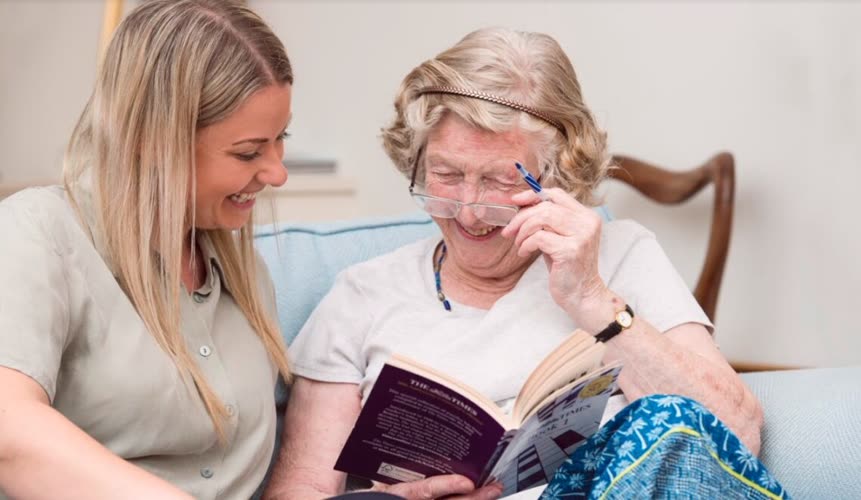
Pain doesn't dictate the schedule
A carer on hand around the clock means washing, dressing and getting up can happen when joints allow it, rather than to a fixed timetable.
✧ Our services
Arthritis can make ordinary tasks painful: getting up, dressing, cooking, opening jars. A live-in carer takes on what has become difficult, helps with mobility and pacing, and keeps life at home comfortable and independent.

Arthritis is a common condition that causes pain and inflammation in the joints. The two most common types are osteoarthritis, where the cartilage in joints wears and stiffens, often in the knees, hips and hands; and rheumatoid arthritis, an autoimmune condition that can affect many joints at once and cause fatigue and flare-ups. Arthritis UK (formerly Versus Arthritis) estimates that more than ten million people in the UK live with arthritis or a similar condition.
Arthritis care at home gives practical help with the tasks that have become painful or unsafe, while protecting independence. With live-in care, help is available at the moments stiffness is worst, which is often first thing in the morning.
With rheumatoid arthritis, symptoms can flare unpredictably, bringing more pain, swelling and exhaustion for days or weeks. A live-in carer can simply do more during a flare and step back as it settles. They can also help keep track of medication such as disease-modifying drugs, blood test appointments and signs of infection, which people on these medicines need to watch for.
Many people with severe osteoarthritis eventually have a knee or hip replacement. Live-in care before surgery can help someone stay safe while waiting, and afterwards supports recovery at home. See care after knee or hip replacement.
Live-in arthritis care starts from £1,200 a week. Attendance Allowance or PIP, council support after a needs assessment and Disabled Facilities Grants for home adaptations may all help. See our funding guide.
For many people with arthritis, the first hour of the day is the hardest. Joints feel locked, fingers will not grip, and getting out of bed can take a long time. Simple steps help:
A live-in carer is there at exactly this time of day, which visiting care can rarely guarantee.
Occupational therapists often teach "joint protection": ways of doing everyday tasks that put less strain on painful joints. Examples include using larger, stronger joints instead of small ones, such as carrying a bag over the forearm rather than gripping with fingers; using aids such as jar openers, tap turners and long-handled reachers; sliding heavy items rather than lifting them; and spreading tasks across the day. A carer can help put these principles into practice so they become habit.
It can seem natural to rest painful joints, but regular, gentle movement is one of the best ways to manage arthritis. It keeps joints flexible, strengthens the muscles around them and helps with mood and sleep. Walking, swimming, chair-based exercises and stretches set by a physiotherapist are all good options. A carer can encourage activity, go on walks, and help with getting to swimming or exercise classes, adjusting on days when a flare makes it too painful.
Long-term pain affects more than joints. It can disturb sleep, reduce the things people feel able to do, and lead to low mood or isolation. Carers help by making sure pain is not simply accepted — encouraging a review with the GP if pain relief is not working — and by keeping up social contact, hobbies and outings adapted to what the person can manage.
When arthritis affects the hands, the smallest tasks become difficult: buttons, zips, keys, taps, pens, opening packaging and preparing food. Occupational therapists can suggest aids such as button hooks, large-handled cutlery, tap turners, key turners, easy-grip pens and electric can openers. Splints may help rest painful joints. A carer can help with the fiddly tasks that cause most pain, while supporting the person to keep using their hands in ways that do not cause harm, which helps maintain movement and strength.
Pain often disturbs sleep, and poor sleep makes pain feel worse, creating a difficult cycle. Things that may help include a regular bedtime routine, taking pain relief at the times advised by the GP, a warm bath before bed, a supportive mattress and pillows positioned to ease painful joints, and avoiding caffeine late in the day. If pain is regularly waking someone at night, it is worth asking the GP to review their treatment. A live-in carer can help with positioning and getting up during the night when stiffness makes it difficult.
Carrying extra weight puts more strain on weight-bearing joints such as knees and hips, and can make osteoarthritis pain worse. Even modest weight loss can reduce pain for some people. A carer can support healthy eating by planning and cooking balanced meals the person enjoys, and by encouraging gentle activity, without making food a source of stress.
Why families choose it
A carer on hand around the clock means washing, dressing and getting up can happen when joints allow it, rather than to a fixed timetable.
Stiff or unstable joints make trips and falls far more likely. Someone present for transfers, stairs and the bathroom catches problems before they become an injury.
On a bad day, a live-in carer can slow the whole routine down and take over tasks that would otherwise be forced through in pain.
Carers help only where help is genuinely needed, so joints and muscles that can still manage a task keep being used rather than losing function through disuse.
Gentle mobility work recommended by a physiotherapist is far more likely to actually happen with the same carer encouraging it every day.
Is it right for us?
If one of these sounds familiar, arthritis care at home is worth a conversation.
When stiff hands, hips or knees make basic personal care difficult or dangerous alone, that's usually the point families start looking at live-in care.
Recovery from a hip or knee replacement, or a bad flare of rheumatoid arthritis, often needs more support than occasional visits can give.
Regular rheumatology reviews, bloods and medication changes are easier to manage with someone who can get the person there and back safely.
Unstable joints and a fall risk are a common trigger — families want someone present, not a person managing alone between visits.
As mobility declines, occasional help stops being enough and full-time, one-to-one support becomes the more realistic option.
What a carer does
Every care plan is built from these, weighted to whatever matters most in your household.
Washing, dressing and grooming at whatever pace stiff or painful joints need that day, without rushing.
Steady help with transfers, stairs and getting around the home, reducing the risk of a fall on a bad joint.
Encouragement to keep up prescribed movement and activity, and company on the days pain makes that hard to face alone.
Housework, laundry and meal preparation taken off hands that struggle with grip, lifting or standing for long.
Related services
Live-in care is not one fixed thing. These are the variations families most often need — and we will tell you which one actually fits.
For people who need attention repeatedly through the night. Covers waking nights and, where nights are consistently broken, two carers in rotation.
A professional steps in so a family carer can rest, from a few days to several weeks. Also the easiest way to try live-in care before committing.
For a hospital discharge, a fall, or a carer suddenly unable to continue. We can often have someone in place within 24 to 48 hours.
Cover through the night only, where days are manageable but nights are not. Useful after a hospital stay or while a diagnosis settles.
Carers experienced in memory loss, sundowning and changes in behaviour. Familiar rooms and one consistent face matter more here than anywhere.
Comfort-focused support at home, working alongside district nurses and the GP so symptom control and dignity come first.
Support for the final months, weeks or days at home, for the person and for the family around them.
Where the need is company and daily structure rather than personal care. Often the first step, before anything more is required.
What you get
Being straight about the boundaries saves everyone a difficult conversation later.
Compared honestly
The three realistic options, side by side. We will tell you if one of the others suits you better.
| Live-in care | Residential care home | Visiting care | |
|---|---|---|---|
| Typical weekly cost, one person | From £1,200 | £1,100 – £1,600 | £300 – £900 |
| Typical weekly cost, a couple | From £1,200 (one carer) | £2,200 – £3,200 (two places) | Varies by hours |
| Staff-to-person ratio | One-to-one | Shared across residents | One-to-one, but only during visits |
| Same carer each day | Yes | No — shift rota | Rarely |
| Stay in your own home | Yes | No | Yes |
| Overnight cover | Yes | Yes | No — unless booked separately |
| Couples stay together | Yes | Often not possible | Yes |
| Pets can stay | Yes | Almost never | Yes |
| Visitors any time | Yes | Visiting hours | Yes |
Care home figures are typical UK ranges for 2026 and vary considerably by region and by whether nursing care is included. We quote our own prices exactly; always confirm a care home's fees directly with them.
Our carers
The single biggest worry families raise, and rightly. You choose the carer from matched profiles, and you can speak to them by video call before deciding anything.


Our carers
Our carers are spread across the UK, supported by regional care managers. Every one is interviewed in person, enhanced DBS checked and reference-checked before they are ever introduced to a family — and you choose who moves in.
 Gladys
Live-in carer
Gladys
Live-in carer
 Patience
Live-in carer
Patience
Live-in carer
 Brenda
Live-in carer
Brenda
Live-in carer
 Refiloe
Live-in carer
Refiloe
Live-in carer
 Vistorine
Live-in carer
Vistorine
Live-in carer
 Monica
Live-in carer
Monica
Live-in carer
How it works
A friendly, no-obligation call to understand the situation, explain how the care works and give you an estimated weekly cost.
We send profiles of available carers matched to your needs. You can speak to them on a video call before deciding.
Your carer moves in and support starts, with a named care manager checking in regularly to make sure it's working.
Free callback
Leave your number and a care manager will call you back — usually within an hour, and always free.
Or call us now on 0800 368 8558 Lines open 8am–10pm, seven days a week
Common questions
What families ask us before arranging care.
Not seeing your question?
Our care managers answer these every day. A no-obligation call takes about ten minutes.
0800 368 8558Lines open 8am–10pm, seven days a week See all questionsLive-in arthritis care starts from £1,200 a week as one fixed weekly fee for the agreed care plan.
Yes. A live-in carer can give more help during a flare, with personal care, meals and housework, and step back when it settles.
No. The aim is to help with what has become painful or unsafe while you keep doing what you can, using aids, pacing and exercises.
Yes. We arrange short-term live-in care for recovery after joint replacement surgery, usually for two to six weeks.
An occupational therapist can recommend aids and adaptations, and a Disabled Facilities Grant from the council may help pay for larger changes.
Attendance Allowance if over State Pension age, or PIP if younger, depending on how arthritis affects daily life. Both are not means-tested.
Taking pain relief as advised, gentle stretching before getting up, a warm shower, easy-to-wear clothes and allowing extra time. A live-in carer is there to help during this hardest part of the day.
Ways of doing tasks that reduce strain on painful joints, such as using larger joints, using aids like jar openers and tap turners, and sliding rather than lifting. Occupational therapists teach these techniques.
Regular, gentle movement generally helps arthritis, keeping joints flexible and muscles strong. Walking, swimming and physiotherapy exercises are good options, with rest during bad flares.
Yes. Long-term pain can affect sleep, activity and mood. It is worth discussing with the GP, and keeping up social contact and enjoyable activities, with support if needed, also helps.
Transparent pricing
One weekly fee covering the agreed care plan. No hidden charges for everyday care.
Read next


Related care
Live-in Care Direct offers you trustworthy and professional staff to rely on with your aged family member instead of sending them away to care homes. Poor mobility and frailty that comes with advancing age can be dealt with perfectly in the comfort of one’s home with live-in care , while staying close to the loved ones.
Osteoporosis affects almost 3 million people in the UK. What else? More than 500,000 people receive hospital care for fractures that occur due to osteoporosis every year. Live-in care for osteoporosis is important for the safety and health of your loved one.
Knee and hip replacement surgery are an invasive procedure. The recovery time can take weeks to months, depending on the severity of the injury that necessitates it. Knee and hip replacement patients may need assistance with daily living tasks, including bathing, dressing, and cooking food. This can take a couple of weeks before the patient can start doing things for himself again. If you are working, you can hire live in care direct service to assist you during the day.
Our private carers service provides one-to-one support at home from a trained, DBS-checked carer — matched to your family's needs, routine and personality.
Our elderly care at home service provides one-to-one support at home from a trained, DBS-checked carer — matched to your family's needs, routine and personality.
Near you
Local pages cover how care is regulated and funded where your relative lives.
Where we work
We arrange care in 850+ towns and cities. Choose your area for local pricing, funding and how care is regulated where you live.
Can’t see your area? Call 0800 368 8558 — we almost certainly still cover it.
Free, no-obligation call back
Answer 5 quick questions and one of our care managers will call you back to talk through the options and give you a clear weekly price.
Prefer to talk now? 0800 368 8558 Lines open 8am–10pm, seven days a week
One of our care managers will call you back shortly. If it's urgent, call us now on 0800 368 8558 .