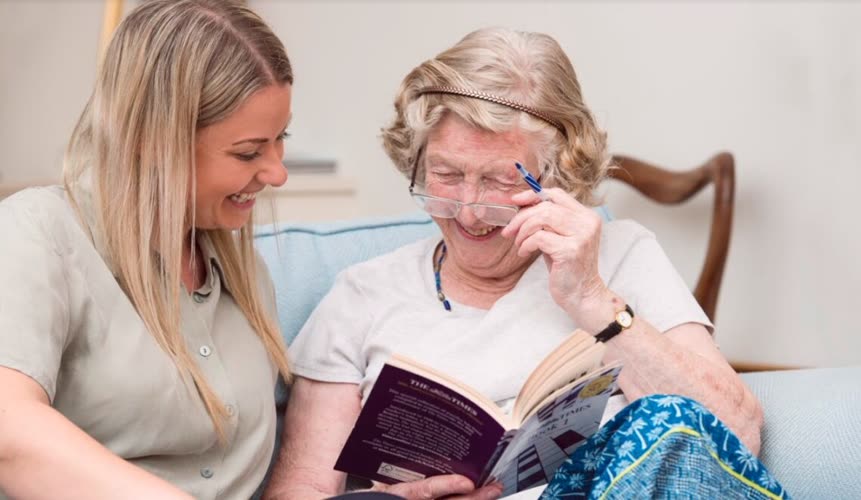
Comfort in familiar surroundings
Own bed, own belongings, own view from the window — for many people, being at home matters as much as anything else in the final weeks.
✧ Our services
Most people say they would prefer to die at home. Live-in end of life care makes that possible: a compassionate carer is there day and night, working alongside nurses and hospice teams, so your family can spend these weeks together.

End of life care is support for someone who is likely to be in the last months, weeks or days of their life, and for the people close to them. It focuses on comfort, dignity and doing what matters most to the person. Many people want to spend that time at home, in their own bed, with family, pets and familiar things around them.
Live-in end of life care means a carer lives in the home and provides personal care, comfort and company around the clock, while the GP, district nurses and hospice teams provide the medical care. It lets families be husbands, wives, sons and daughters again, rather than exhausted carers.
District nurses and hospice-at-home teams manage symptoms, set up anticipatory ("just in case") medicines so pain and breathlessness can be treated quickly, and provide equipment such as a hospital bed and pressure mattress. The live-in carer works with them as part of one team, and is often the person who calls them when something changes at 3am. Marie Curie and local hospices can also provide night-sitting support.
If someone has a rapidly deteriorating condition and may be entering the terminal phase, a doctor or nurse can complete a Fast Track assessment for NHS Continuing Healthcare. If approved, the NHS funds care in full, including care at home, often within days. Ask the GP, district nurse, hospital or hospice to complete it as early as possible. Private end of life care at home starts from £1,300 a week, and we can start while funding is being arranged.
Families often worry about what to expect. In the final days, people usually sleep more, eat and drink very little, and their breathing may change. Knowing this in advance, having the right medicines in the house and having an experienced carer present helps families feel prepared rather than frightened. It also helps to know in advance who to call when death happens, which the nurses and carer will explain.
An expected death at home is not an emergency; there is no need to call 999. The GP or out-of-hours service is contacted to verify the death, and families can take the time they need before calling a funeral director. The carer can stay to help with practical matters and support the family in those first hours.
Knowing what is normal at the end of life can make an enormous difference to how frightened families feel. Every death is different, but common changes include:
An experienced end of life carer recognises these changes, keeps the person comfortable, calls the nurses when needed, and gently explains to the family what is happening.
Towards the end of life, the GP usually prescribes anticipatory medicines — small supplies of medicine for pain, breathlessness, sickness, agitation and secretions — which are kept in the home so district nurses can give them quickly if symptoms appear, day or night. It is worth asking the GP about these early. Families should also have the numbers for the district nursing team, the out-of-hours GP service and the local hospice advice line. The live-in carer keeps these to hand and knows who to call.
End of life care is not only about the final days. For many families, the weeks before are a precious chance to say things that matter, see friends and family, listen to favourite music, look through photographs, or make a video or letters for grandchildren. With a carer handling the practical care, families often find they can be more present with the person they love. Respecting the person's faith, culture and wishes — including who they want with them and what they want around them — is at the heart of good care.
Caring for someone at the end of their life is one of the most intense experiences a family can go through. It is common to feel exhausted, overwhelmed, numb or guilty, sometimes all at once. Accepting help is not a failure; it allows you to rest and to be with the person rather than constantly caring for them. Hospices, Marie Curie and many local services offer support for families before and after a death, including bereavement counselling. Please use them.
At the end of life, spiritual and cultural needs can matter as much as physical comfort. For some people that means prayer, religious rituals, a visit from a faith leader or particular practices around death; for others it means music, being outdoors, or simply having certain people close by. Talking about these wishes in advance, where possible, and writing them into the care plan helps make sure they are honoured. Carers respect each family's faith and customs and follow their wishes in the final days and after death.
Why families choose it
Own bed, own belongings, own view from the window — for many people, being at home matters as much as anything else in the final weeks.
Consistency matters enormously at this stage. The same carer understands preferences, routines and what brings comfort, without having to be told again.
With daily care handled, relatives can spend time sitting, talking and being present, rather than exhausted by physical caregiving.
Carers work alongside district nurses, the GP and hospice teams so symptom control and pain relief stay on track.
Reassurance that help is always close by, whatever time it is, matters both to the person and to the family.
Is it right for us?
If one of these sounds familiar, end of life care at home is worth a conversation.
Many people say clearly they want to die at home. Live-in care is often what makes that possible.
When visiting district nurses and occasional carers are no longer enough to manage safely, live-in care fills the gap between visits.
Taking over the physical care lets a partner or adult child stay present emotionally rather than being consumed by tasks.
When a hospice bed isn't wanted, or isn't available, live-in care can step in quickly to keep someone comfortable at home.
Knowing someone is there constantly gives reassurance to relatives who cannot be there themselves around the clock.
What a carer does
Every care plan is built from these, weighted to whatever matters most in your household.
Personal care and positioning given gently and at the person's own pace, focused entirely on comfort and dignity.
Working closely with district nurses, the GP and the palliative team so pain relief and symptom control stay coordinated.
A calm, steady presence for the person and quiet, practical support for the family around them.
Handling the practical side of daily life so family members can spend their time together, not on chores and logistics.
Related services
Live-in care is not one fixed thing. These are the variations families most often need — and we will tell you which one actually fits.
For people who need attention repeatedly through the night. Covers waking nights and, where nights are consistently broken, two carers in rotation.
A professional steps in so a family carer can rest, from a few days to several weeks. Also the easiest way to try live-in care before committing.
For a hospital discharge, a fall, or a carer suddenly unable to continue. We can often have someone in place within 24 to 48 hours.
Cover through the night only, where days are manageable but nights are not. Useful after a hospital stay or while a diagnosis settles.
Carers experienced in memory loss, sundowning and changes in behaviour. Familiar rooms and one consistent face matter more here than anywhere.
Comfort-focused support at home, working alongside district nurses and the GP so symptom control and dignity come first.
Where the need is company and daily structure rather than personal care. Often the first step, before anything more is required.
What you get
Being straight about the boundaries saves everyone a difficult conversation later.
Compared honestly
The three realistic options, side by side. We will tell you if one of the others suits you better.
| Live-in care | Residential care home | Visiting care | |
|---|---|---|---|
| Typical weekly cost, one person | From £1,200 | £1,100 – £1,600 | £300 – £900 |
| Typical weekly cost, a couple | From £1,200 (one carer) | £2,200 – £3,200 (two places) | Varies by hours |
| Staff-to-person ratio | One-to-one | Shared across residents | One-to-one, but only during visits |
| Same carer each day | Yes | No — shift rota | Rarely |
| Stay in your own home | Yes | No | Yes |
| Overnight cover | Yes | Yes | No — unless booked separately |
| Couples stay together | Yes | Often not possible | Yes |
| Pets can stay | Yes | Almost never | Yes |
| Visitors any time | Yes | Visiting hours | Yes |
Care home figures are typical UK ranges for 2026 and vary considerably by region and by whether nursing care is included. We quote our own prices exactly; always confirm a care home's fees directly with them.
Our carers
The single biggest worry families raise, and rightly. You choose the carer from matched profiles, and you can speak to them by video call before deciding anything.


Our carers
Our carers are spread across the UK, supported by regional care managers. Every one is interviewed in person, enhanced DBS checked and reference-checked before they are ever introduced to a family — and you choose who moves in.
 Monica
Live-in carer
Monica
Live-in carer
 Brenda
Live-in carer
Brenda
Live-in carer
 Vistorine
Live-in carer
Vistorine
Live-in carer
 Patience
Live-in carer
Patience
Live-in carer
 Refiloe
Live-in carer
Refiloe
Live-in carer
 Gladys
Live-in carer
Gladys
Live-in carer
How it works
A friendly, no-obligation call to understand the situation, explain how the care works and give you an estimated weekly cost.
We send profiles of available carers matched to your needs. You can speak to them on a video call before deciding.
Your carer moves in and support starts, with a named care manager checking in regularly to make sure it's working.
Free callback
Leave your number and a care manager will call you back — usually within an hour, and always free.
Or call us now on 0800 368 8558 Lines open 8am–10pm, seven days a week
Common questions
What families ask us before arranging care.
Not seeing your question?
Our care managers answer these every day. A no-obligation call takes about ten minutes.
0800 368 8558Lines open 8am–10pm, seven days a week See all questionsYes. With a live-in carer, district nurses and hospice support, most people who wish to die at home can do so, with comfort and dignity.
Often, yes. A Fast Track NHS Continuing Healthcare assessment by a doctor or nurse can fund care at home in full, usually within days, for someone who is rapidly deteriorating.
We prioritise end of life requests and can usually have a carer in the home within 24 to 48 hours, sometimes the same day.
Private live-in end of life care starts from £1,300 a week, or £2,600 a week with two carers so someone is always awake at night. Fast Track funding may cover it.
An expected death is not an emergency. The GP or out-of-hours doctor is called to verify the death, and the family can take their time before contacting a funeral director.
Yes. Supporting the family is part of the role, from practical help to explaining what to expect and giving relatives time to rest and be together.
Small supplies of medicines for pain, breathlessness, sickness, agitation and secretions, prescribed by the GP and kept at home so district nurses can give them quickly if symptoms appear, day or night.
Yes. As the body slows down, people naturally want less food and drink. It is part of the dying process, not starvation. Mouth care and small sips, if wanted, keep the person comfortable.
The district nursing team or the out-of-hours GP service, and the local hospice advice line if one is available. Keep these numbers by the phone; the live-in carer will know who to call.
Yes. The carer can stay to help with practical matters, support the family in the first hours, and wait with them until the GP and funeral director have attended, if the family would like that.
Transparent pricing
One weekly fee covering the agreed care plan. No hidden charges for everyday care.
Read next


Related care
Palliative Care at Home is a step taken to improve the quality and wellness of people's lives, including adults, children, and families that are faced with problems that may be a threat to their lives. Caring for these people demands their loved ones and relatives to remain closer to them all the time to provide them with the necessary care. Shouldering these responsibilities can very, very time-consuming and tedious. Due to this, you may have some of your activities cut short to concentrate on providing the care they require.
Cancer care involves providing professional support to individuals diagnosed with cancer, focusing on their emotional, physical, and medical needs. In London, where many families juggle busy lifestyles and complex medical systems, having access to live in cancer care ensures peace of mind and proper support at home.
24 hour live-in care means someone is in the home around the clock — including through the night, when help is most often needed and least often available.
Overnight home care means that a trained carer stays at the individual’s home overnight to assist with any situation that may arise. The caregiving staff member seamlessly facilitates daily routine which continues during the night as well.
Motor neurone disease, or amyotrophic lateral sclerosis (ALS), is a progressive and fatal neurodegenerative disorder. These diseases are characterized by the death of motor neurons in both the brain and spinal cord, leading to muscle weakness, atrophy and paralysis.
Near you
Local pages cover how care is regulated and funded where your relative lives.
Where we work
We arrange care in 850+ towns and cities. Choose your area for local pricing, funding and how care is regulated where you live.
Can’t see your area? Call 0800 368 8558 — we almost certainly still cover it.
Free, no-obligation call back
Answer 5 quick questions and one of our care managers will call you back to talk through the options and give you a clear weekly price.
Prefer to talk now? 0800 368 8558 Lines open 8am–10pm, seven days a week
One of our care managers will call you back shortly. If it's urgent, call us now on 0800 368 8558 .