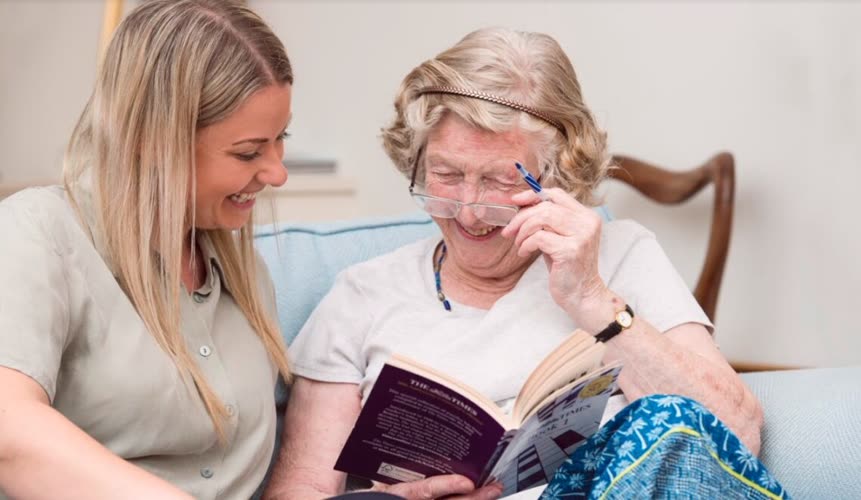
A fast, safe discharge from hospital
Care can be in place within 24 to 48 hours, avoiding a delayed discharge or a longer stay than is medically necessary.
✧ Our services
When care is needed now, not next month, we can usually have a vetted live-in carer in the home within 24 to 48 hours. Emergency home care covers sudden hospital discharges, a family carer falling ill, a fall, or a care arrangement that has broken down.

Emergency home care is care arranged at very short notice because something has changed suddenly and someone cannot safely be left without support. Rather than waiting weeks for an assessment or a care home bed, a live-in carer moves into the home, usually within 24 to 48 hours of your call, and takes over the essentials straight away.
It can be a stop-gap for a few weeks while longer-term plans are made, or the start of ongoing live-in care. Either way, the aim is the same: make the next few days safe.
Emergency care still has to be safe care, so we keep the process short but do not skip the important steps. Our guide emergency live-in care: what actually happens covers it in full, but in outline:
Delays in leaving hospital are often caused by the lack of care at home rather than by medical need. If the hospital discharge team is waiting for a care package, tell them a live-in carer is being arranged privately; this can often speed things up. The carer can meet your relative at the hospital or at home, collect medication, and make sure the first night goes smoothly. They work alongside district nurses, reablement teams and therapists who continue to visit.
There is no emergency surcharge. Live-in care starts from £1,200 a week (£1,300 for complex needs) whether it is arranged in two days or two months. If the person may be eligible for NHS Continuing Healthcare, particularly the Fast Track route at the end of life, ask the hospital or GP to start the assessment as early as possible. See our funding guide for other help.
A family carer being taken ill is one of the most common reasons for an urgent call. Emergency respite care puts a live-in carer into the home within days, so the person being cared for does not have to move into an emergency care home placement while their husband, wife or son recovers. When the family carer is well again, the respite carer hands back, or stays on for longer if needed. See live-in respite care for planned breaks.
When a crisis hits, hospitals and social workers may suggest a short-term care home placement because it can be found quickly. For some people that is the right answer. But an emergency move can be unsettling, especially for someone with dementia, and short stays often become permanent. Emergency live-in care keeps the person at home while the family works out what they want long term, and it is usually available just as quickly.
When care is arranged in a hurry, a few practical steps make the first days far safer:
If there is no time for any of this, the carer will work through it with you on arrival. It simply helps to know what matters most.
Sometimes a crisis needs a different kind of help. If someone is acutely unwell, has chest pain, severe breathlessness or signs of a stroke, call 999. If they need urgent medical assessment but it is not life-threatening, NHS 111 can advise. If needs have become clinical around the clock, a nursing home or hospital-level care may be safer than live-in care. We will always tell you honestly if we think another service would serve your relative better, even if that means we do not arrange the care.
An emergency placement buys time. Once the immediate crisis is under control, it is worth using the next few weeks to think about the longer term: whether the person can return to managing independently, would benefit from ongoing live-in care, or needs a different setting. A needs assessment from the council, an NHS Continuing Healthcare checklist if health needs are significant, and conversations about lasting power of attorney are all easier once things have calmed down. Many families find that the emergency carer becomes the long-term carer, simply because the arrangement works.
Why families choose it
Care can be in place within 24 to 48 hours, avoiding a delayed discharge or a longer stay than is medically necessary.
The days immediately after a fall, surgery or a sudden decline are when close attention reduces the risk of readmission.
Emergency live-in care buys time to properly consider longer-term options, rather than agreeing to a care home place out of panic.
Cover can start immediately and then be reviewed, adjusted or stepped down once the full picture and long-term needs are clear.
With immediate cover arranged, relatives can focus on decisions and support rather than trying to provide round-the-clock care themselves overnight.
Is it right for us?
If one of these sounds familiar, emergency home care at home is worth a conversation.
The most common call we get. The hospital wants to discharge and there is no care in place at home yet.
Once it's clear someone can no longer be safely left alone, families often need cover the same day or the next.
An illness, an accident, or their own hospital admission can leave a care gap overnight with no warning.
After a stroke, a serious infection, or a rapid deterioration, round-the-clock support may be needed before a longer-term care plan is worked out.
A carer resigns without notice, or an agency can no longer cover the hours. We can step in quickly to avoid a gap in care.
What a carer does
Every care plan is built from these, weighted to whatever matters most in your household.
Personal care, meals and mobility help from the moment the carer arrives, often within 24 to 48 hours.
Working with the hospital discharge team and GP so nothing gets missed during a fast-moving situation.
A calm, steady presence during what is often a frightening and disorientating time for the person and the family.
Practical help getting the home safe and comfortable again after a hospital stay or sudden crisis.
Related services
Live-in care is not one fixed thing. These are the variations families most often need — and we will tell you which one actually fits.
For people who need attention repeatedly through the night. Covers waking nights and, where nights are consistently broken, two carers in rotation.
A professional steps in so a family carer can rest, from a few days to several weeks. Also the easiest way to try live-in care before committing.
Cover through the night only, where days are manageable but nights are not. Useful after a hospital stay or while a diagnosis settles.
Carers experienced in memory loss, sundowning and changes in behaviour. Familiar rooms and one consistent face matter more here than anywhere.
Comfort-focused support at home, working alongside district nurses and the GP so symptom control and dignity come first.
Support for the final months, weeks or days at home, for the person and for the family around them.
Where the need is company and daily structure rather than personal care. Often the first step, before anything more is required.
What you get
Being straight about the boundaries saves everyone a difficult conversation later.
Compared honestly
The three realistic options, side by side. We will tell you if one of the others suits you better.
| Live-in care | Residential care home | Visiting care | |
|---|---|---|---|
| Typical weekly cost, one person | From £1,200 | £1,100 – £1,600 | £300 – £900 |
| Typical weekly cost, a couple | From £1,200 (one carer) | £2,200 – £3,200 (two places) | Varies by hours |
| Staff-to-person ratio | One-to-one | Shared across residents | One-to-one, but only during visits |
| Same carer each day | Yes | No — shift rota | Rarely |
| Stay in your own home | Yes | No | Yes |
| Overnight cover | Yes | Yes | No — unless booked separately |
| Couples stay together | Yes | Often not possible | Yes |
| Pets can stay | Yes | Almost never | Yes |
| Visitors any time | Yes | Visiting hours | Yes |
Care home figures are typical UK ranges for 2026 and vary considerably by region and by whether nursing care is included. We quote our own prices exactly; always confirm a care home's fees directly with them.
Our carers
The single biggest worry families raise, and rightly. You choose the carer from matched profiles, and you can speak to them by video call before deciding anything.

Our carers
Our carers are spread across the UK, supported by regional care managers. Every one is interviewed in person, enhanced DBS checked and reference-checked before they are ever introduced to a family — and you choose who moves in.
 Vistorine
Live-in carer
Vistorine
Live-in carer
 Brenda
Live-in carer
Brenda
Live-in carer
 Gladys
Live-in carer
Gladys
Live-in carer
 Patience
Live-in carer
Patience
Live-in carer
 Monica
Live-in carer
Monica
Live-in carer
 Refiloe
Live-in carer
Refiloe
Live-in carer
How it works
A friendly, no-obligation call to understand the situation, explain how the care works and give you an estimated weekly cost.
We send profiles of available carers matched to your needs. You can speak to them on a video call before deciding.
Your carer moves in and support starts, with a named care manager checking in regularly to make sure it's working.
Free callback
Leave your number and a care manager will call you back — usually within an hour, and always free.
Or call us now on 0800 368 8558 Lines open 8am–10pm, seven days a week
Common questions
What families ask us before arranging care.
Not seeing your question?
Our care managers answer these every day. A no-obligation call takes about ten minutes.
0800 368 8558Lines open 8am–10pm, seven days a week See all questionsIn most parts of the UK we can have a vetted live-in carer in the home within 24 to 48 hours of your first call, and sometimes the same day for a hospital discharge.
No. Emergency live-in care starts from the same £1,200 a week as planned care, or £1,300 for complex needs such as dementia. There is no emergency surcharge.
Yes. Every carer is interviewed in person, reference checked and enhanced DBS checked before being introduced to any family, whatever the timescale.
Yes. The carer can meet your relative at the hospital or at home, collect medication and make sure the first night home is safe. They work alongside district nurses and reablement teams.
As long as it is needed. Some families use it for two or three weeks while they make longer-term plans; others continue with the same carer as ongoing live-in care.
We can arrange urgent live-in care so someone can stay at home. Ask the GP or hospital about NHS Continuing Healthcare Fast Track, which can fund end of life care at home quickly.
Yes. We arrange emergency care seven days a week, and our phone lines are open from 8am to 10pm every day. Weekend hospital discharges are common and we plan for them.
Call us straight away. Same-day arrival is sometimes possible, depending on location and carer availability, but we will be honest about what can be arranged and suggest interim options if needed.
We carry out a thorough telephone assessment before care starts, covering needs, risks, medication and the home. The care plan is then refined in person during the first few days.
Yes. Emergency care can be short-term: once your parent has recovered their strength and confidence, care can be reduced or ended with notice. There is no long-term commitment, and some families keep a lighter arrangement in place instead.
Transparent pricing
One weekly fee covering the agreed care plan. No hidden charges for everyday care.
Read next


Related care
Our respite care at home service provides one-to-one support at home from a trained, DBS-checked carer — matched to your family's needs, routine and personality.
When an elderly individual is admitted into the hospital for treatment, it can be a very difficult time. They will have to deal with the stress of being in hospital and there may also be other medical issues that they are dealing with at the same time. The process of recovery can take a long time, which means that you need to find ways to provide them with care whilst they are in hospital - whether this is through using visiting services or by providing them with Elderly care UK.
24 hour live-in care means someone is in the home around the clock — including through the night, when help is most often needed and least often available.
What is end of life care? End of life care is health care for a person who has been diagnosed with a terminal illness and is nearing his death every day, or it can be an aged person who is enjoying his last days and weeks in the world. Naturally, this type of care has to be of the live-in kind, in the precious comfort of one’s home. End of life care at home is undoubtedly a sensitive and touchy job and needs someone who understands what a person deserves in the near-death days of his life.
Our live in care service provides one-to-one support at home from a trained, DBS-checked carer — matched to your family's needs, routine and personality.
Near you
Local pages cover how care is regulated and funded where your relative lives.
Where we work
We arrange care in 850+ towns and cities. Choose your area for local pricing, funding and how care is regulated where you live.
Can’t see your area? Call 0800 368 8558 — we almost certainly still cover it.
Free, no-obligation call back
Answer 5 quick questions and one of our care managers will call you back to talk through the options and give you a clear weekly price.
Prefer to talk now? 0800 368 8558 Lines open 8am–10pm, seven days a week
One of our care managers will call you back shortly. If it's urgent, call us now on 0800 368 8558 .