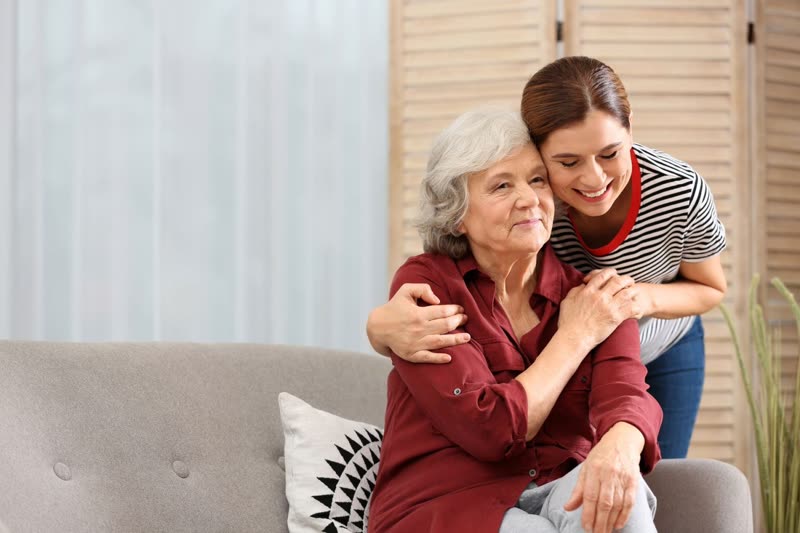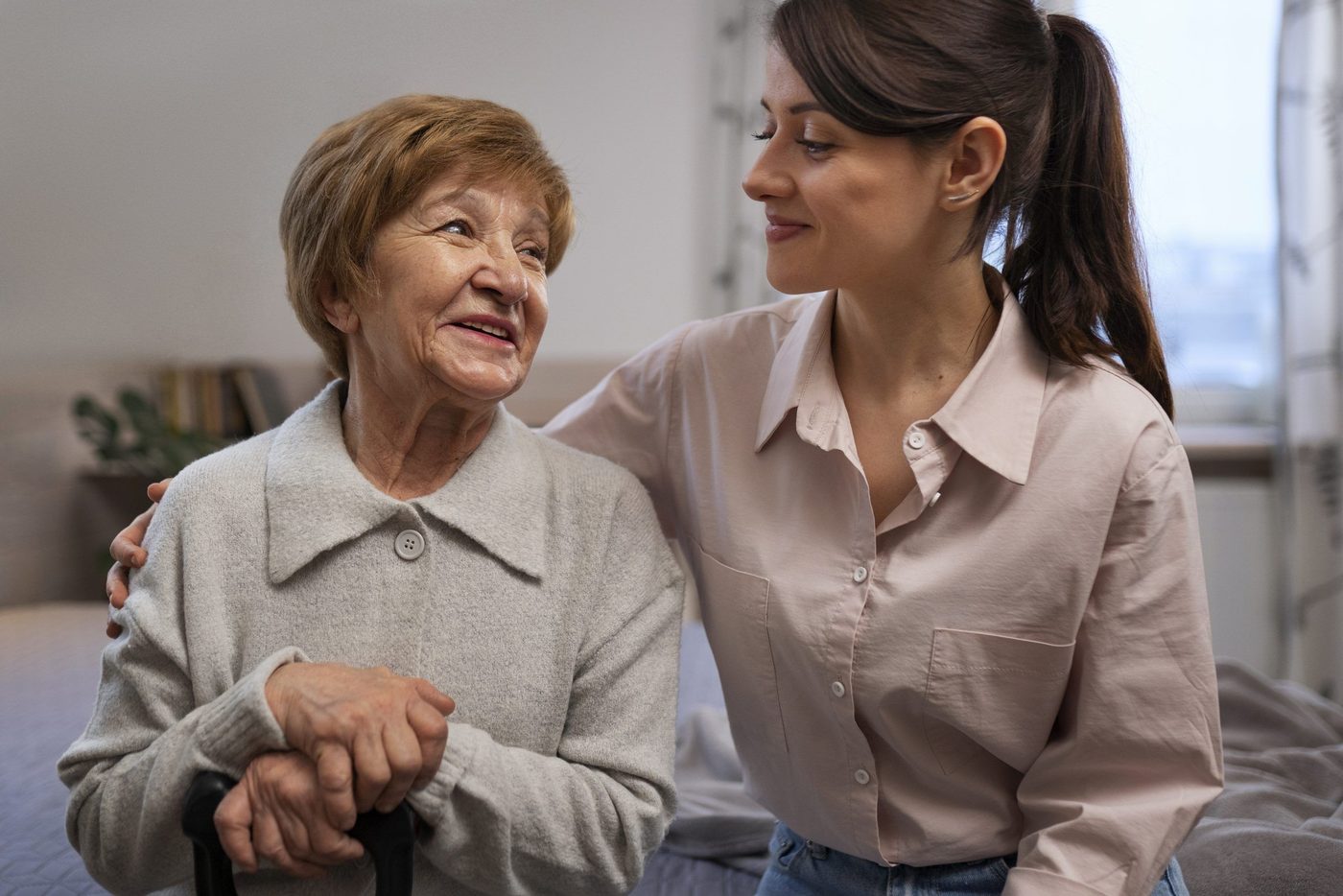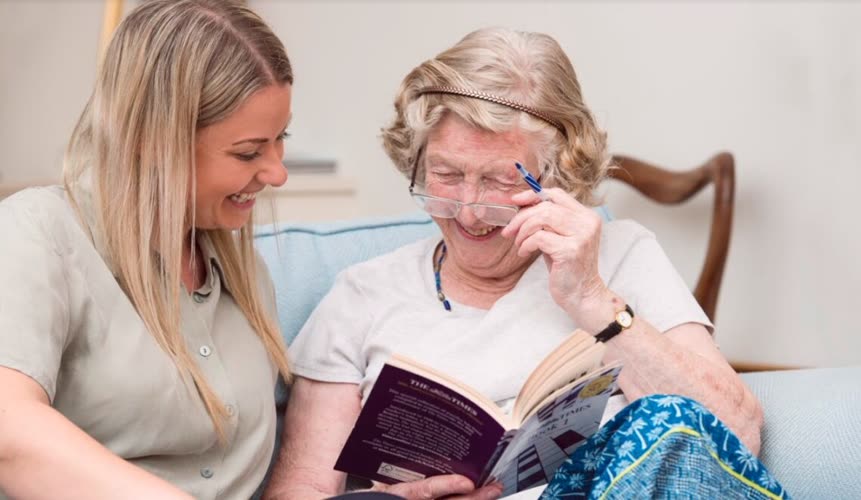
The same person for intimate tasks
Washing, dressing and toileting are easier to accept help with from one familiar carer rather than a different person each visit.
✧ Our services
Personal care is the help people often find hardest to ask for. A private live-in carer provides washing, dressing, continence care and daily routines with dignity and discretion, and becomes someone your family knows and trusts.

Personal care is help with intimate, everyday tasks: washing, bathing and showering, dressing, oral care, shaving and grooming, using the toilet and continence care, and eating. It is often the point at which families first need outside help, because these are the tasks older people find hardest to ask a son or daughter to help with, and that family members may feel uncomfortable providing.
A private live-in carer provides personal care as part of a wider role that also includes meals, housework, medication prompts and company, so help is there whenever it is needed, not only at a scheduled visit.
Good personal care is about how it is done as much as what is done. That means asking rather than assuming, letting the person do as much as they can for themselves, keeping them covered and warm, following their preferences about when and how they wash, and never rushing. Because a live-in carer is with the same person every day, trust builds quickly and personal care becomes a normal part of the routine rather than an ordeal.
Some families look for a private carer independently. That can work, but it leaves the family responsible for checking references and criminal records, cover when the carer is ill or on holiday, and finding a replacement if the arrangement ends suddenly. As an introductory agency, we find, interview and vet self-employed carers and introduce those who fit, and we arrange relief carers for breaks, while you keep the personal, one-to-one relationship of a private carer. Read private carers vs an introductory agency.
Live-in personal care starts from £1,200 a week. People over State Pension age who need help with personal care may qualify for Attendance Allowance, which is not means-tested. In Scotland, personal care is free for anyone assessed as needing it. Council support after a needs assessment is also possible. See our funding guide.
For many older people, accepting help with washing or the toilet is a significant step, and it can feel like a loss of dignity and privacy. Good carers introduce personal care gradually and with respect:
Most people find that within a short time, personal care becomes a normal, unremarkable part of the day.
Continence problems are very common in later life and in many health conditions, yet they are often the thing people find hardest to talk about. Carers help by establishing regular toilet routines, making sure the toilet or a commode is easy to reach, choosing suitable continence products, and paying careful attention to skin care. It is also worth asking the GP or a continence nurse for an assessment, as many causes can be treated or improved, and the NHS may provide products.
Families who hire a carer directly, rather than through an agency, usually become responsible for more than they expect. Depending on the arrangement, that can include checking identity, right to work and references; arranging a DBS check; understanding whether the carer is employed or self-employed and the tax and insurance obligations that follow; finding cover for sickness and holidays; and handling any problems or disputes. None of this is impossible, but it is worth knowing before you start. An introductory agency takes on the search, checks and cover arrangements while keeping a direct, personal relationship with the carer.
Personal care often overlaps with health needs: skin that needs checking for pressure damage, catheters, stomas, or diabetes affecting the feet. Carers provide personal care within their training and competence, follow the advice of district nurses, and report anything that needs clinical attention. Clinical tasks remain with the nursing team unless a carer has been specifically trained and signed off.
Oral care is easily overlooked, yet poor oral health can lead to pain, difficulty eating, weight loss and even chest infections. Carers help with brushing teeth or cleaning dentures twice a day, checking the mouth for sore spots, making sure dentures fit well, and arranging dental appointments. Grooming matters too: hair, nails, shaving and make-up are part of how people feel about themselves. Helping someone look the way they have always liked to look is a simple but powerful way to protect dignity and wellbeing.
Older skin is thinner and more fragile, and people who sit or lie for long periods are at risk of pressure ulcers. Personal care is the ideal time to check skin: looking for redness, dryness, broken skin or sore areas, particularly over the bottom, hips, heels and elbows. Carers keep skin clean and dry, use moisturiser, encourage regular changes of position, and report any red area that does not fade to the district nurse promptly. This daily attention is one of the most valuable, and least visible, parts of good personal care.
The bathroom is where many falls happen, so washing is often the first personal care task people need help with. A carer makes bathing safer by checking water temperature, using a shower seat or bath board where needed, keeping floors dry and staying close by, while respecting privacy as much as possible. Many people find a regular, unhurried routine turns washing back into something relaxing.
Why families choose it
Washing, dressing and toileting are easier to accept help with from one familiar carer rather than a different person each visit.
A live-in personal care assistant learns preferences — how someone likes to wash, dress and start the day — rather than working to a generic routine.
Handing intimate personal care to a professional carer lets relatives go back to being a son, daughter or partner rather than a carer first.
With someone in the house full time, personal care happens consistently rather than being squeezed between other commitments.
A personal care assistant can start with light help and take on more — mobility, medication, full personal care — as needs change, without changing carer.
Is it right for us?
If one of these sounds familiar, personal care at home is worth a conversation.
When getting in and out of the bath, or managing buttons and zips, starts taking too long or feels unsafe alone.
Many families are comfortable helping with meals or shopping, but find intimate personal care uncomfortable for both sides. That's a common reason to bring in a professional.
A temporary period of needing help with washing, dressing and toileting while strength returns.
Someone with early dementia may still be physically capable but needs reminding and encouragement to wash, dress and eat.
When a spouse can no longer safely help with transfers or personal care themselves, a carer takes on the physical side of it.
What a carer does
Every care plan is built from these, weighted to whatever matters most in your household.
Washing, bathing, dressing and grooming, given with dignity and at the pace the person sets.
Practical, discreet support with continence needs, handled without fuss or embarrassment.
Conversation and familiarity that make personal care feel less clinical and more like everyday help from someone trusted.
Meal preparation, laundry and light housework fitted around personal care, so the day runs smoothly.
Related services
Live-in care is not one fixed thing. These are the variations families most often need — and we will tell you which one actually fits.
For people who need attention repeatedly through the night. Covers waking nights and, where nights are consistently broken, two carers in rotation.
A professional steps in so a family carer can rest, from a few days to several weeks. Also the easiest way to try live-in care before committing.
For a hospital discharge, a fall, or a carer suddenly unable to continue. We can often have someone in place within 24 to 48 hours.
Cover through the night only, where days are manageable but nights are not. Useful after a hospital stay or while a diagnosis settles.
Carers experienced in memory loss, sundowning and changes in behaviour. Familiar rooms and one consistent face matter more here than anywhere.
Comfort-focused support at home, working alongside district nurses and the GP so symptom control and dignity come first.
Support for the final months, weeks or days at home, for the person and for the family around them.
Where the need is company and daily structure rather than personal care. Often the first step, before anything more is required.
What you get
Being straight about the boundaries saves everyone a difficult conversation later.
Compared honestly
The three realistic options, side by side. We will tell you if one of the others suits you better.
| Live-in care | Residential care home | Visiting care | |
|---|---|---|---|
| Typical weekly cost, one person | From £1,200 | £1,100 – £1,600 | £300 – £900 |
| Typical weekly cost, a couple | From £1,200 (one carer) | £2,200 – £3,200 (two places) | Varies by hours |
| Staff-to-person ratio | One-to-one | Shared across residents | One-to-one, but only during visits |
| Same carer each day | Yes | No — shift rota | Rarely |
| Stay in your own home | Yes | No | Yes |
| Overnight cover | Yes | Yes | No — unless booked separately |
| Couples stay together | Yes | Often not possible | Yes |
| Pets can stay | Yes | Almost never | Yes |
| Visitors any time | Yes | Visiting hours | Yes |
Care home figures are typical UK ranges for 2026 and vary considerably by region and by whether nursing care is included. We quote our own prices exactly; always confirm a care home's fees directly with them.
Our carers
The single biggest worry families raise, and rightly. You choose the carer from matched profiles, and you can speak to them by video call before deciding anything.

Our carers
Our carers are spread across the UK, supported by regional care managers. Every one is interviewed in person, enhanced DBS checked and reference-checked before they are ever introduced to a family — and you choose who moves in.
 Monica
Live-in carer
Monica
Live-in carer
 Brenda
Live-in carer
Brenda
Live-in carer
 Gladys
Live-in carer
Gladys
Live-in carer
 Patience
Live-in carer
Patience
Live-in carer
 Vistorine
Live-in carer
Vistorine
Live-in carer
 Refiloe
Live-in carer
Refiloe
Live-in carer
How it works
A friendly, no-obligation call to understand the situation, explain how the care works and give you an estimated weekly cost.
We send profiles of available carers matched to your needs. You can speak to them on a video call before deciding.
Your carer moves in and support starts, with a named care manager checking in regularly to make sure it's working.
Free callback
Leave your number and a care manager will call you back — usually within an hour, and always free.
Or call us now on 0800 368 8558 Lines open 8am–10pm, seven days a week
Common questions
What families ask us before arranging care.
Not seeing your question?
Our care managers answer these every day. A no-obligation call takes about ten minutes.
0800 368 8558Lines open 8am–10pm, seven days a week See all questionsA private live-in carer arranged through us starts from £1,200 a week, as one fixed weekly fee for the agreed care plan.
Washing, bathing, dressing, oral care, grooming, toileting, continence care, skin care and help with eating, plus medication prompts and safe movement.
Hiring directly can cost less but leaves you responsible for vetting, cover and replacements. An introductory agency handles those while you keep a personal relationship with the carer.
Yes. In Scotland, personal care is free for anyone assessed by the council as needing it, though other costs of care may still apply.
It is very common. A patient, respectful carer, matched to her personality and preferences, and a gentle introduction usually help her feel comfortable within a few days.
Yes. You can ask for a male or female carer, and we take preferences about gender, language and faith into account when matching.
By getting to know the person first, asking how they like things done, keeping them covered and warm, using respectful language, encouraging independence and respecting preferences about the carer's gender.
Identity, right to work, references and a DBS check, plus whether the carer is employed or self-employed and the tax and insurance obligations that follow. You also need a plan for sickness and holiday cover.
Often, yes. A continence assessment from the GP or a continence nurse can identify treatable causes and may lead to the NHS providing suitable products.
Carers can support these where they have been trained and the district nurse has agreed the plan. Otherwise, the nursing team carries out clinical tasks and the carer supports day-to-day hygiene.
Transparent pricing
One weekly fee covering the agreed care plan. No hidden charges for everyday care.
Read next


Related care
Our elderly care at home service provides one-to-one support at home from a trained, DBS-checked carer — matched to your family's needs, routine and personality.
General home care is here to encompass all that falls in no other category of live-in care service. For people who are in their fifties or sixties, retired from intensive career responsibilities, keeping up well with their daily activities and chores, have friends and family, and they just need someone to give a hand with them. You have general home care at your service. Getting yourself or your family member a live-in care service in the familiar environment of a home is the best way to live an independent life while staying at a place with an emotional connection. And it is getting popular day by day. Sometimes, there are financial repercussions to shifting to a residential senior community centre or a senior care home. However, all this gets easier when you get a reliable, professional, qualified, and most importantly, an empathic carer at home.
Disability care is specialised home care designed to support individuals with physical, learning, sensory, or complex disabilities. This type of care focuses on assisting with daily activities, mobility, personal care, and emotional well-being while promoting independence and quality of life.
Our companionship care at home service provides one-to-one support at home from a trained, DBS-checked carer — matched to your family's needs, routine and personality.
Our live in care service provides one-to-one support at home from a trained, DBS-checked carer — matched to your family's needs, routine and personality.
Near you
Local pages cover how care is regulated and funded where your relative lives.
Where we work
We arrange care in 850+ towns and cities. Choose your area for local pricing, funding and how care is regulated where you live.
Can’t see your area? Call 0800 368 8558 — we almost certainly still cover it.
Free, no-obligation call back
Answer 5 quick questions and one of our care managers will call you back to talk through the options and give you a clear weekly price.
Prefer to talk now? 0800 368 8558 Lines open 8am–10pm, seven days a week
One of our care managers will call you back shortly. If it's urgent, call us now on 0800 368 8558 .