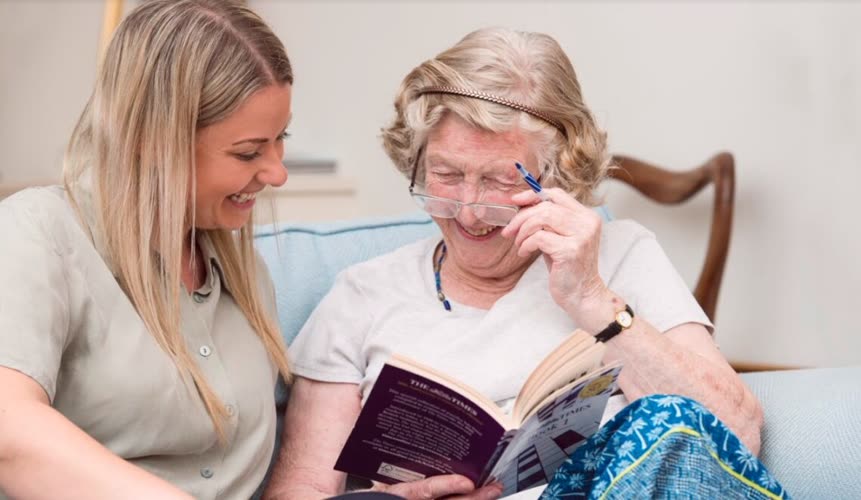
Consistent support for daily physical tasks
Mobility, transfers and personal care are handled by someone who already knows the person's own way of moving and what help is genuinely needed.
✧ Our services
Cerebral palsy is lifelong, and so is the right to live your own life. Live-in CP care gives adults with cerebral palsy consistent, one-to-one support at home with personal care, mobility and communication, on their own terms.

Cerebral palsy (CP) is a lifelong condition caused by damage to the developing brain before, during or shortly after birth. It affects movement and coordination, and can also affect speech, eating and swallowing, vision and learning, to very different degrees. Some people with CP live completely independently; others need support with most daily activities. CP does not get worse over time, but its effects on the body, such as stiffness, pain and fatigue, can change as people get older.
Cerebral palsy care at home provides the support an individual needs to live the life they choose. We mainly support adults with CP, many of them living independently or moving out of the family home for the first time.
Many adults with CP are cared for by parents who are themselves getting older. Families often come to us when they want to plan for the future, so their son or daughter can keep living at home, or move into their own home, with reliable support that does not depend on them. Live-in care provides that continuity. As people with CP age, they may also experience more pain, fatigue or reduced mobility earlier than their peers, and care can adapt gradually.
For many people with CP, especially those who communicate non-verbally, being supported by people who really know them is essential. We match carers carefully to personality, interests and experience, introduce them before care begins, and plan a small team of regular relief carers so breaks and holidays do not mean strangers. The person with CP, and their family where appropriate, has the final say.
Live-in CP care starts from £1,300 a week, or from £2,600 where two carers are needed. Funding often comes from the council after a needs assessment, frequently as direct payments or a personal budget that lets you choose your care; NHS Continuing Healthcare where needs are complex and health-related; PIP; and, where CP resulted from medical negligence, a compensation award. If you are looking for care for a child with cerebral palsy, call us and we will talk through what is possible and where to get support.
Cerebral palsy itself does not get worse, but living with it for decades takes a toll on the body. Many adults with CP experience changes earlier than their peers, including:
Adult services for CP are less developed than children's services, so these changes can go unrecognised. A carer who knows the person well notices them and helps get the right reviews from the GP, physiotherapy, occupational therapy and speech and language therapy.
Many people with CP live with muscle stiffness (spasticity), spasms and pain. Treatment may include medication, physiotherapy, splints, positioning equipment and, for some, specialist treatments such as botulinum toxin injections. Day to day, carers help with stretches, correct positioning in bed and in the wheelchair, fitting splints as advised, and noticing when pain or posture changes, so the specialist team can review treatment.
Some people with CP have speech that strangers find hard to understand; others use signs, symbols or electronic communication aids. Being misunderstood, or spoken over, is one of the most frustrating parts of daily life for many people with CP. Good carers take time, never pretend to understand when they do not, speak to the person rather than about them, and learn the individual's way of communicating. Consistency matters: the longer a carer is with someone, the better they understand them.
Adults with cerebral palsy have the same rights as anyone else to make choices about their lives, relationships, work and home. Care should support those choices rather than limit them. That means care planned around the person's goals, carers who respect privacy and dignity, and support to do the things that matter to them, whether that is going to college, holding down a job, going to gigs or living in their own flat.
For many people with cerebral palsy, the right wheelchair, seating and equipment make an enormous difference to comfort, posture, independence and pain. Needs change over time, particularly as people get older, so it is worth asking for regular reviews from the wheelchair service, physiotherapy and occupational therapy. Carers help by using equipment correctly, making sure the person is positioned well throughout the day, maintaining equipment and reporting problems such as discomfort, pressure marks or equipment that no longer fits.
For young people with cerebral palsy, the move from children's to adult health and social care services can be a challenging time. Familiar teams may no longer be involved, and adult services are often organised differently. Planning early, ideally from around the age of fourteen, helps: a transition plan, an assessment from adult social care, and conversations about where and how the young person wants to live as an adult. Live-in care can support young adults who want to live more independently, whether in the family home or their own place.
Why families choose it
Mobility, transfers and personal care are handled by someone who already knows the person's own way of moving and what help is genuinely needed.
Where speech or communication is affected, a consistent carer learns to understand cues and preferences that a rotating team would miss.
Physiotherapy and stretching programmes work far better with someone at home to support them every day rather than only at scheduled sessions.
Carers help only where needed, supporting the person to do as much for themselves as they safely can rather than doing everything for them.
Parents and family carers of someone with cerebral palsy are often caring around the clock for years. Live-in care gives them a genuine, sustained break.
Is it right for us?
If one of these sounds familiar, cerebral palsy care at home is worth a conversation.
Years of physical caregiving — lifting, transfers, broken sleep — take a toll. Bringing in professional support protects the carer as much as the person they support.
As a young person with cerebral palsy becomes an adult, families often look for more structured, consistent support than informal family care alone.
A change in physical ability or the onset of seizures often means someone needs to be present at all times, not just checking in periodically.
Where speech is limited, families want a carer who will take the time to learn how the person actually communicates, not rush past it.
Whether for a family holiday, an illness, or simply a break, a live-in carer can step in for a defined period without disrupting routine.
What a carer does
Every care plan is built from these, weighted to whatever matters most in your household.
Personal care, dressing and mealtimes provided at the person's own pace, with help given only where it's genuinely needed.
Safe transfers, positioning and consistent help keeping up physiotherapy routines between appointments.
A carer who takes the time to understand individual communication needs and builds a genuine, patient rapport.
Housework and daily tasks handled at home, giving family carers real, sustained relief from round-the-clock demands.
Related services
Live-in care is not one fixed thing. These are the variations families most often need — and we will tell you which one actually fits.
For people who need attention repeatedly through the night. Covers waking nights and, where nights are consistently broken, two carers in rotation.
A professional steps in so a family carer can rest, from a few days to several weeks. Also the easiest way to try live-in care before committing.
For a hospital discharge, a fall, or a carer suddenly unable to continue. We can often have someone in place within 24 to 48 hours.
Cover through the night only, where days are manageable but nights are not. Useful after a hospital stay or while a diagnosis settles.
Carers experienced in memory loss, sundowning and changes in behaviour. Familiar rooms and one consistent face matter more here than anywhere.
Comfort-focused support at home, working alongside district nurses and the GP so symptom control and dignity come first.
Support for the final months, weeks or days at home, for the person and for the family around them.
Where the need is company and daily structure rather than personal care. Often the first step, before anything more is required.
What you get
Being straight about the boundaries saves everyone a difficult conversation later.
Compared honestly
The three realistic options, side by side. We will tell you if one of the others suits you better.
| Live-in care | Residential care home | Visiting care | |
|---|---|---|---|
| Typical weekly cost, one person | From £1,200 | £1,100 – £1,600 | £300 – £900 |
| Typical weekly cost, a couple | From £1,200 (one carer) | £2,200 – £3,200 (two places) | Varies by hours |
| Staff-to-person ratio | One-to-one | Shared across residents | One-to-one, but only during visits |
| Same carer each day | Yes | No — shift rota | Rarely |
| Stay in your own home | Yes | No | Yes |
| Overnight cover | Yes | Yes | No — unless booked separately |
| Couples stay together | Yes | Often not possible | Yes |
| Pets can stay | Yes | Almost never | Yes |
| Visitors any time | Yes | Visiting hours | Yes |
Care home figures are typical UK ranges for 2026 and vary considerably by region and by whether nursing care is included. We quote our own prices exactly; always confirm a care home's fees directly with them.
Our carers
The single biggest worry families raise, and rightly. You choose the carer from matched profiles, and you can speak to them by video call before deciding anything.

Our carers
Our carers are spread across the UK, supported by regional care managers. Every one is interviewed in person, enhanced DBS checked and reference-checked before they are ever introduced to a family — and you choose who moves in.
 Brenda
Live-in carer
Brenda
Live-in carer
 Patience
Live-in carer
Patience
Live-in carer
 Gladys
Live-in carer
Gladys
Live-in carer
 Vistorine
Live-in carer
Vistorine
Live-in carer
 Refiloe
Live-in carer
Refiloe
Live-in carer
 Monica
Live-in carer
Monica
Live-in carer
How it works
A friendly, no-obligation call to understand the situation, explain how the care works and give you an estimated weekly cost.
We send profiles of available carers matched to your needs. You can speak to them on a video call before deciding.
Your carer moves in and support starts, with a named care manager checking in regularly to make sure it's working.
Free callback
Leave your number and a care manager will call you back — usually within an hour, and always free.
Or call us now on 0800 368 8558 Lines open 8am–10pm, seven days a week
Common questions
What families ask us before arranging care.
Not seeing your question?
Our care managers answer these every day. A no-obligation call takes about ten minutes.
0800 368 8558Lines open 8am–10pm, seven days a week See all questionsLive-in cerebral palsy care starts from £1,300 a week. Where two carers are needed, for example for two-person transfers or night-time needs, it starts from £2,600 a week.
Yes. We mainly support adults with CP, including young adults moving into their own home and older adults whose parents can no longer provide care.
Yes. We match carers who are patient and experienced with communication aids and non-verbal communication, and give them time to learn how the person communicates.
Often, yes. Direct payments or a personal budget from the council let you choose your own care. Ask your social worker whether live-in care can be funded this way.
Yes. Many parents come to us to plan care that will continue reliably as they get older, so their son or daughter can stay in or move into their own home.
Our focus is adults, but call us and we will discuss your situation. Your local council's children's disability team and Scope can also advise.
The brain injury that causes CP does not get worse, but many adults experience earlier joint pain, fatigue, reduced mobility and swallowing changes. Regular reviews with the GP and therapists help manage these.
By supporting stretches, correct positioning in bed and the wheelchair, fitting splints as advised, and reporting changes in pain or posture so the specialist team can review treatment.
Many can, with the right support. Live-in care helps adults with CP live in their own homes, study, work and socialise, with care planned around their own goals and choices.
Take time, speak to the person rather than about them, never pretend to understand, and learn their way of communicating, whether speech, signs or an electronic aid.
Transparent pricing
One weekly fee covering the agreed care plan. No hidden charges for everyday care.
Read next


Related care
Disability care is specialised home care designed to support individuals with physical, learning, sensory, or complex disabilities. This type of care focuses on assisting with daily activities, mobility, personal care, and emotional well-being while promoting independence and quality of life.
Learning disabilities are neurological disorders that affect one or more parts of the brain. They can make it difficult for someone to process information and learn new skills. And, sometimes you will need to consider professional care at home for this person.
Muscular dystrophies are a group of diseases that progressively damage muscle tissue and weaken muscles. The most common muscular dystrophy is Duchenne Muscular Dystrophy, which affects about 1 in every 3,500 live male births. These conditions will affect children differently depending on the type of disease they have and their age.
There are two types of nervous systems, the central nervous system, and the peripheral nervous system. The central nervous system is composed of the brain and spinal cord, and the peripheral nervous system is composed of nerves that branch out of the spinal cord and extend to the other body parts.
Our private carers service provides one-to-one support at home from a trained, DBS-checked carer — matched to your family's needs, routine and personality.
Near you
Local pages cover how care is regulated and funded where your relative lives.
Where we work
We arrange care in 850+ towns and cities. Choose your area for local pricing, funding and how care is regulated where you live.
Can’t see your area? Call 0800 368 8558 — we almost certainly still cover it.
Free, no-obligation call back
Answer 5 quick questions and one of our care managers will call you back to talk through the options and give you a clear weekly price.
Prefer to talk now? 0800 368 8558 Lines open 8am–10pm, seven days a week
One of our care managers will call you back shortly. If it's urgent, call us now on 0800 368 8558 .