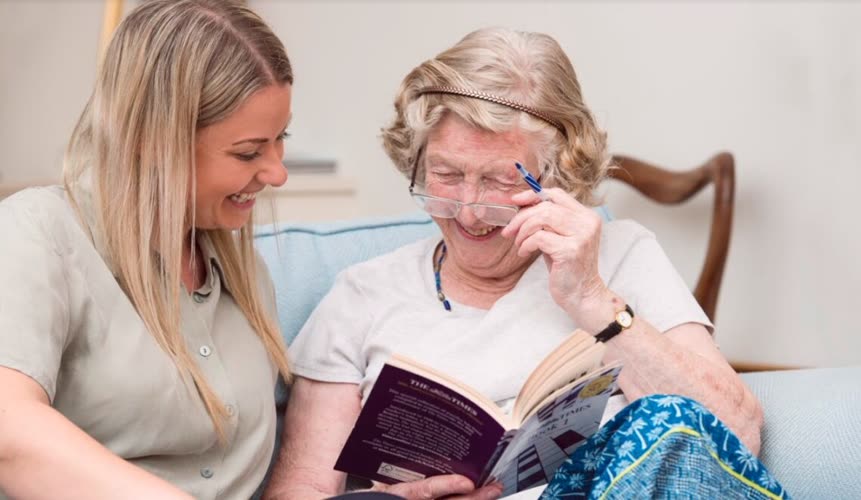
Consistent pressure area care
Regular repositioning matters enormously for preventing pressure sores. A carer who knows the routine and the person's skin will keep to it properly.
✧ Our services
Living with a spinal cord injury means routines that must happen reliably every day. A live-in spinal injury carer handles transfers, pressure care and bowel and bladder routines, so you can focus on living your life at home.

A spinal cord injury damages the nerves that carry messages between the brain and the body. Depending on the level and completeness of the injury, it can affect movement and sensation in the legs (paraplegia) or in the arms and legs (tetraplegia), as well as bladder and bowel function, skin sensation, breathing and temperature control. The Spinal Injuries Association estimates that thousands of people in the UK are newly injured each year.
Spinal injury care at home provides the practical support a person needs to live independently in their own home, following their own routines and priorities. With live-in care, the carer lives in, so support is there when it is needed rather than only at booked visit times.
People with an injury at around T6 or above can experience autonomic dysreflexia, a sudden and dangerous rise in blood pressure usually triggered by something below the injury level, such as a full bladder, constipation or a pressure sore. Symptoms can include a pounding headache, flushing and sweating above the injury. Carers supporting people at risk are briefed to recognise it, remove the likely cause, sit the person upright and follow the individual's emergency plan.
Leaving a spinal injuries centre after months of rehabilitation is a big step. Having a carer in place from the day of discharge, trained on the person's own routines and equipment, helps the transition go smoothly. We work with the centre's discharge team, community nurses and case managers to make sure the carer understands the bowel, bladder and skin regimes before care starts.
Live-in spinal injury care starts from £1,300 a week, or from £2,600 a week where two carers are needed. Care may be funded through a personal injury claim, NHS Continuing Healthcare, the council after a needs assessment (including direct payments so you can choose your carers), or PIP. See our funding guide.
With reduced sensation, a person may not feel the early discomfort that normally makes us shift position, so pressure ulcers can develop quickly and become serious. Prevention is a daily discipline:
For many people with a spinal cord injury, bowel and bladder management follows a set routine that must happen reliably, at the right time, every day. When it slips, the consequences range from discomfort and embarrassment to infection or autonomic dysreflexia. Carers are trained on the individual's routine and carry it out discreetly and consistently, so the person can plan their day with confidence. Any changes, signs of infection or problems are reported to the nursing team.
Staying active matters after a spinal injury, for physical and mental health. Many people take up adapted sports, wheelchair skills training or gym programmes, and organisations such as the Back Up Trust run activities that rebuild confidence. A carer can support getting to sessions, help with the practical side, and make an active, social life possible rather than an exception.
A spinal injury changes relationships as well as bodies. Partners can find themselves slipping into the role of carer, which can strain a relationship. Having a live-in carer take on personal care and practical tasks lets partners remain partners, parents remain parents, and the person with the injury stay in charge of their own life. We match carers carefully so that the person feels comfortable with them in the intimate aspects of care that spinal injury often involves.
Many people with higher-level spinal cord injuries cannot regulate their body temperature properly, because they may not sweat or shiver normally below the level of their injury. They can overheat or become too cold easily, sometimes without realising. Carers help by keeping the home at a comfortable temperature, adjusting clothing and bedding, offering cool drinks in hot weather, protecting skin from burns from hot water bottles or radiators where sensation is reduced, and watching for signs of overheating or chill.
A spinal injury does not have to mean the end of travel. Many people travel in the UK and abroad with the right planning: accessible accommodation, equipment such as a portable hoist or shower chair, advance arrangements with airlines, and enough supplies for bowel and bladder routines. A carer can travel with the person to provide care throughout the trip, with travel and accommodation costs for the carer agreed in advance. The Spinal Injuries Association and Back Up Trust offer advice on accessible travel.
Adjusting to life after a spinal injury takes time, and low mood and anxiety are common. Peer support from others living with spinal injury, such as through the Spinal Injuries Association or Back Up Trust, is often especially valuable, alongside professional support where needed.
Why families choose it
Regular repositioning matters enormously for preventing pressure sores. A carer who knows the routine and the person's skin will keep to it properly.
Exercises set by a physiotherapist are far more likely to happen consistently with someone in the house to encourage and assist with them.
Moving between bed, wheelchair and chair carries real fall risk. A carer trained in safe technique reduces that risk considerably.
Many spinal injuries affect continence. A carer supports the day-to-day routine alongside district nurses for any clinical elements.
Adapting to a new level of independence is difficult. Having someone there who understands the practical reality helps as much as the physical support does.
Is it right for us?
If one of these sounds familiar, spinal injury care at home is worth a conversation.
Discharge after a spinal injury often needs support in place from day one, sometimes at short notice.
If repositioning isn't managed consistently, skin breakdown can happen quickly and become a serious complication.
Moving someone from bed to wheelchair takes technique and, often, more strength than one family member has.
Day-to-day management alongside visits from a district nurse for anything clinical.
Many people with spinal injuries would rather remain independent at home than move into a care facility, provided the right support is in place.
What a carer does
Every care plan is built from these, weighted to whatever matters most in your household.
Safe, practised support moving between bed, wheelchair and chair, within what one carer can manage safely.
Regular repositioning and awareness of skin health, alongside district nurses for any clinical care.
Encouragement to keep up prescribed exercises, plus company through what can be a difficult adjustment.
Laundry, light housework and meal preparation, so daily life keeps running around the care plan.
Related services
Live-in care is not one fixed thing. These are the variations families most often need — and we will tell you which one actually fits.
For people who need attention repeatedly through the night. Covers waking nights and, where nights are consistently broken, two carers in rotation.
A professional steps in so a family carer can rest, from a few days to several weeks. Also the easiest way to try live-in care before committing.
For a hospital discharge, a fall, or a carer suddenly unable to continue. We can often have someone in place within 24 to 48 hours.
Cover through the night only, where days are manageable but nights are not. Useful after a hospital stay or while a diagnosis settles.
Carers experienced in memory loss, sundowning and changes in behaviour. Familiar rooms and one consistent face matter more here than anywhere.
Comfort-focused support at home, working alongside district nurses and the GP so symptom control and dignity come first.
Support for the final months, weeks or days at home, for the person and for the family around them.
Where the need is company and daily structure rather than personal care. Often the first step, before anything more is required.
What you get
Being straight about the boundaries saves everyone a difficult conversation later.
Compared honestly
The three realistic options, side by side. We will tell you if one of the others suits you better.
| Live-in care | Residential care home | Visiting care | |
|---|---|---|---|
| Typical weekly cost, one person | From £1,200 | £1,100 – £1,600 | £300 – £900 |
| Typical weekly cost, a couple | From £1,200 (one carer) | £2,200 – £3,200 (two places) | Varies by hours |
| Staff-to-person ratio | One-to-one | Shared across residents | One-to-one, but only during visits |
| Same carer each day | Yes | No — shift rota | Rarely |
| Stay in your own home | Yes | No | Yes |
| Overnight cover | Yes | Yes | No — unless booked separately |
| Couples stay together | Yes | Often not possible | Yes |
| Pets can stay | Yes | Almost never | Yes |
| Visitors any time | Yes | Visiting hours | Yes |
Care home figures are typical UK ranges for 2026 and vary considerably by region and by whether nursing care is included. We quote our own prices exactly; always confirm a care home's fees directly with them.
Our carers
The single biggest worry families raise, and rightly. You choose the carer from matched profiles, and you can speak to them by video call before deciding anything.


Our carers
Our carers are spread across the UK, supported by regional care managers. Every one is interviewed in person, enhanced DBS checked and reference-checked before they are ever introduced to a family — and you choose who moves in.
 Vistorine
Live-in carer
Vistorine
Live-in carer
 Patience
Live-in carer
Patience
Live-in carer
 Refiloe
Live-in carer
Refiloe
Live-in carer
 Monica
Live-in carer
Monica
Live-in carer
 Gladys
Live-in carer
Gladys
Live-in carer
 Brenda
Live-in carer
Brenda
Live-in carer
How it works
A friendly, no-obligation call to understand the situation, explain how the care works and give you an estimated weekly cost.
We send profiles of available carers matched to your needs. You can speak to them on a video call before deciding.
Your carer moves in and support starts, with a named care manager checking in regularly to make sure it's working.
Free callback
Leave your number and a care manager will call you back — usually within an hour, and always free.
Or call us now on 0800 368 8558 Lines open 8am–10pm, seven days a week
Common questions
What families ask us before arranging care.
Not seeing your question?
Our care managers answer these every day. A no-obligation call takes about ten minutes.
0800 368 8558Lines open 8am–10pm, seven days a week See all questionsLive-in spinal injury care starts from £1,300 a week. Where two carers are needed, for example for two-person transfers or frequent night-time repositioning, it starts from £2,600 a week.
Yes, where the carer has been trained on the individual's routine and signed off, in line with the plan agreed with your nursing team or spinal centre.
Yes. Carers are experienced with hoists, slings and transfers and are shown your own equipment before care starts. Some transfers need two people, which we plan for.
Yes. We work with the centre's discharge team and community nurses so the carer understands the routines and equipment from day one.
Often, yes. Direct payments from the council let you choose your own care provider. Ask your social worker whether live-in care can be funded this way.
Carers supporting people with higher-level injuries are briefed on the signs of autonomic dysreflexia and the individual's emergency plan before they start.
It depends on the person, their skin and their equipment. The spinal team or district nurse will advise on a schedule for pressure relief in bed and in the wheelchair, which carers follow carefully.
Yes. Carers can support getting to adapted sports, gym sessions and wheelchair skills training, helping with the practical side so staying active is part of everyday life.
Yes. Given the intimate nature of spinal injury care, many people prefer a carer of the same gender, and we take that into account when matching.
The carer relieves pressure from the area immediately and reports it to the district nurse promptly. Early action is essential to stop a mark developing into a pressure ulcer.
Transparent pricing
One weekly fee covering the agreed care plan. No hidden charges for everyday care.
Read next



Related care
Disability care is specialised home care designed to support individuals with physical, learning, sensory, or complex disabilities. This type of care focuses on assisting with daily activities, mobility, personal care, and emotional well-being while promoting independence and quality of life.
Muscular dystrophies are a group of diseases that progressively damage muscle tissue and weaken muscles. The most common muscular dystrophy is Duchenne Muscular Dystrophy, which affects about 1 in every 3,500 live male births. These conditions will affect children differently depending on the type of disease they have and their age.
Multiple sclerosis or MS is a nervous system pathology characterized by nerve fiber damage. With a debilitated nervous system, the person suffers from physical disabilities and a wide range of other symptoms such as mobility problems, vision loss, fatigue, numbness and tingling sensations, weakness, muscle stiffening and spasms, and cognitive function loss.
Brain injuries can be acquired brain injuries or traumatic brain injuries. Acquired brain injuries (ABIs) are caused by stroke or brain tumor, while a traumatic brain injury (TBI) results from physical trauma. Either way, the patient needs live-in care that specializes in brain injury, especially if the disability is life-long. The worst form of body damage that could happen is an injury to the brain. Head injuries are the leading cause of disability and death in adults. Brain injuries acquired or traumatic result in brain tissue damage and hence swelling of the tissue. Since the skull cannot accommodate by increasing in size, there is a buildup of pressure in the brain.
There are two types of nervous systems, the central nervous system, and the peripheral nervous system. The central nervous system is composed of the brain and spinal cord, and the peripheral nervous system is composed of nerves that branch out of the spinal cord and extend to the other body parts.
Near you
Local pages cover how care is regulated and funded where your relative lives.
Where we work
We arrange care in 850+ towns and cities. Choose your area for local pricing, funding and how care is regulated where you live.
Can’t see your area? Call 0800 368 8558 — we almost certainly still cover it.
Free, no-obligation call back
Answer 5 quick questions and one of our care managers will call you back to talk through the options and give you a clear weekly price.
Prefer to talk now? 0800 368 8558 Lines open 8am–10pm, seven days a week
One of our care managers will call you back shortly. If it's urgent, call us now on 0800 368 8558 .