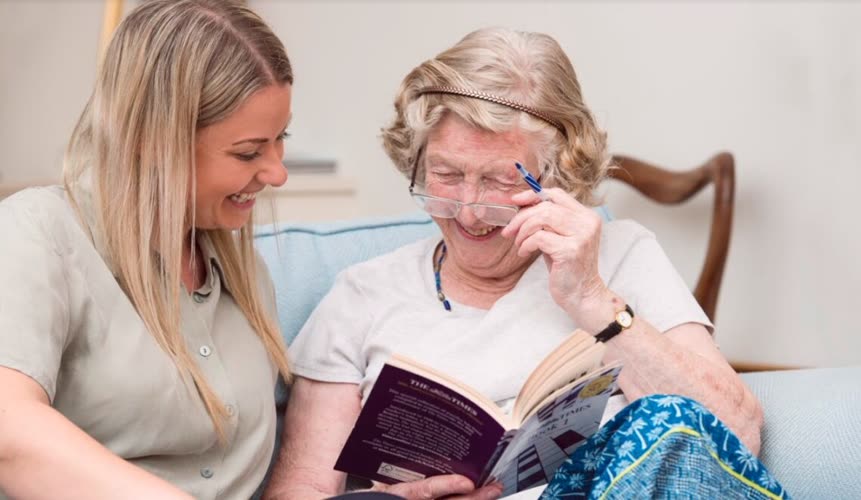
A familiar face reduces isolation
Loneliness is one of the biggest drivers of low mood in later life. A live-in carer provides daily company and conversation, not just a wellbeing check ticked off a visit sheet.
✧ Our services
Depression, anxiety and loneliness are common in later life, and they make every other part of life harder. A live-in carer brings steady company, routine and practical help, and works alongside your GP and mental health team.

Mental health support at home is practical and emotional help for someone living with a mental health condition, such as depression, anxiety, bipolar disorder or schizophrenia, so they can stay well and independent in their own home. In later life, depression and anxiety are especially common and often go unrecognised, mistaken for "just getting older" or overlapping with physical illness, bereavement, loneliness or the early stages of dementia.
A live-in carer is not a therapist. What they provide is often just as important: a steady, caring presence every day, a routine that supports recovery, and someone who notices when things are getting worse.
Carers work alongside the GP, the community mental health team, psychiatrists, psychologists and talking therapies services. They support appointments, encourage the person to follow their treatment plan, and share observations (with consent) that help professionals adjust care. If there are concerns about someone's safety, the carer follows the crisis plan and contacts the right service straight away. In a mental health crisis, NHS 111 (selecting the mental health option) and 999 in an emergency are always available.
For older people, mental health rarely stands alone. Depression can follow a stroke, a diagnosis of Parkinson's or the loss of a partner; anxiety often comes with breathlessness or falls; and changes in mood or behaviour can be an early sign of dementia. Because live-in care supports the whole person, the carer can help with all of these together.
Live-in support starts from £1,200 a week. Attendance Allowance or PIP, council support after a needs assessment, and aftercare under section 117 of the Mental Health Act for people who have been detained under certain sections, may help with the cost. See our funding guide.
Depression in later life is common but often missed, partly because older people may not talk about feelings and partly because symptoms can be mistaken for "just ageing". Signs to look out for include:
Depression is treatable at any age. If you notice these signs, encourage the person to see their GP. Anyone expressing thoughts of suicide should be supported to get help urgently.
Anxiety often grows after a fall, an illness, a bereavement or a period of isolation, and it can quietly shrink someone's world until they no longer leave the house. A carer can help rebuild confidence gradually, with small, manageable steps: a short walk, a visit to a familiar shop, a coffee with a friend. Alongside support from the GP or talking therapies, practical encouragement from someone they trust often makes the difference.
People with long-term conditions such as bipolar disorder or schizophrenia often live well with the right treatment and support. Consistency is important: regular routines, medication taken as prescribed, and a relationship with people who know them and can recognise early warning signs. A live-in carer can provide that consistency, support the person to stay connected with their mental health team, and help put the relapse prevention plan into action if warning signs appear.
Losing a husband, wife or close friend is one of the commonest triggers of depression and loneliness in later life. Grief is a natural process, not an illness, but some people need extra support through it. A carer offers company, routine and practical help during a very difficult time, and can gently encourage the person to seek bereavement support, such as Cruse Bereavement Support, if they are struggling. Our guide to supporting the elderly through grief explains more.
Sleep and mental health are closely connected. Poor sleep can worsen low mood and anxiety, and low mood and anxiety disturb sleep. A regular routine helps: getting up and going to bed at similar times, daylight and activity during the day, a calm evening, and avoiding caffeine and alcohol late in the day. A carer can help build and keep this routine, which often makes a noticeable difference to mood over a few weeks, alongside any treatment from the GP.
Most mental health difficulties are managed through the GP and community services, but some situations need urgent help. If someone talks about wanting to end their life, has made plans to harm themselves, is experiencing severe confusion, or seems at immediate risk, get help straight away: call NHS 111 and choose the mental health option, contact the crisis team if the person has one, or call 999 in an emergency. Carers are briefed on each person's crisis plan and never leave someone at risk alone.
Supporting a relative with mental health difficulties can be exhausting and worrying. Family carers are entitled to a carer's assessment from the council, and organisations such as Mind, Rethink Mental Illness and local carers' centres offer information and support for families as well as for the person themselves.
Why families choose it
Loneliness is one of the biggest drivers of low mood in later life. A live-in carer provides daily company and conversation, not just a wellbeing check ticked off a visit sheet.
A steady daily routine — meals, activities, a regular bedtime — genuinely helps mood and anxiety, and it happens at home rather than in a facility with someone else's timetable.
A withdrawn mood, a skipped meal, stopped hobbies — a carer who is there every day spots these changes far sooner than a family member visiting weekly.
Carers encourage attendance at appointments and support the plan set by clinicians; they work with the person's care team rather than replacing it.
When a carer handles the daily support, visits from relatives can go back to being about company rather than caregiving duties.
Is it right for us?
If one of these sounds familiar, mental health support at home is worth a conversation.
Often the first sign a family notices. Company and gentle structure at home can make a real difference alongside professional treatment.
Sudden isolation after decades with someone else in the house is a common trigger for anxiety and depression in later life.
Worry about falls, forgetting things, or simply coping day to day can become constant and exhausting without someone present.
Depression and anxiety are common alongside conditions like Parkinson's, stroke recovery or chronic pain, and can be missed when physical needs take priority.
A carer on the ground, plus a named care manager, closes the gap that phone calls cannot.
What a carer does
Every care plan is built from these, weighted to whatever matters most in your household.
Regular conversation and shared time that directly reduces the isolation behind so much low mood in later life.
Consistent mealtimes, activity and sleep patterns, built around what actually helps this person feel steady.
Support to attend appointments and follow the plan set by the GP or mental health service, never a replacement for it.
Meals, housework and everyday admin taken care of, so there is less to feel overwhelmed by.
Related services
Live-in care is not one fixed thing. These are the variations families most often need — and we will tell you which one actually fits.
For people who need attention repeatedly through the night. Covers waking nights and, where nights are consistently broken, two carers in rotation.
A professional steps in so a family carer can rest, from a few days to several weeks. Also the easiest way to try live-in care before committing.
For a hospital discharge, a fall, or a carer suddenly unable to continue. We can often have someone in place within 24 to 48 hours.
Cover through the night only, where days are manageable but nights are not. Useful after a hospital stay or while a diagnosis settles.
Carers experienced in memory loss, sundowning and changes in behaviour. Familiar rooms and one consistent face matter more here than anywhere.
Comfort-focused support at home, working alongside district nurses and the GP so symptom control and dignity come first.
Support for the final months, weeks or days at home, for the person and for the family around them.
Where the need is company and daily structure rather than personal care. Often the first step, before anything more is required.
What you get
Being straight about the boundaries saves everyone a difficult conversation later.
Compared honestly
The three realistic options, side by side. We will tell you if one of the others suits you better.
| Live-in care | Residential care home | Visiting care | |
|---|---|---|---|
| Typical weekly cost, one person | From £1,200 | £1,100 – £1,600 | £300 – £900 |
| Typical weekly cost, a couple | From £1,200 (one carer) | £2,200 – £3,200 (two places) | Varies by hours |
| Staff-to-person ratio | One-to-one | Shared across residents | One-to-one, but only during visits |
| Same carer each day | Yes | No — shift rota | Rarely |
| Stay in your own home | Yes | No | Yes |
| Overnight cover | Yes | Yes | No — unless booked separately |
| Couples stay together | Yes | Often not possible | Yes |
| Pets can stay | Yes | Almost never | Yes |
| Visitors any time | Yes | Visiting hours | Yes |
Care home figures are typical UK ranges for 2026 and vary considerably by region and by whether nursing care is included. We quote our own prices exactly; always confirm a care home's fees directly with them.
Our carers
The single biggest worry families raise, and rightly. You choose the carer from matched profiles, and you can speak to them by video call before deciding anything.


Our carers
Our carers are spread across the UK, supported by regional care managers. Every one is interviewed in person, enhanced DBS checked and reference-checked before they are ever introduced to a family — and you choose who moves in.
 Brenda
Live-in carer
Brenda
Live-in carer
 Gladys
Live-in carer
Gladys
Live-in carer
 Refiloe
Live-in carer
Refiloe
Live-in carer
 Patience
Live-in carer
Patience
Live-in carer
 Monica
Live-in carer
Monica
Live-in carer
 Vistorine
Live-in carer
Vistorine
Live-in carer
How it works
A friendly, no-obligation call to understand the situation, explain how the care works and give you an estimated weekly cost.
We send profiles of available carers matched to your needs. You can speak to them on a video call before deciding.
Your carer moves in and support starts, with a named care manager checking in regularly to make sure it's working.
Free callback
Leave your number and a care manager will call you back — usually within an hour, and always free.
Or call us now on 0800 368 8558 Lines open 8am–10pm, seven days a week
Common questions
What families ask us before arranging care.
Not seeing your question?
Our care managers answer these every day. A no-obligation call takes about ten minutes.
0800 368 8558Lines open 8am–10pm, seven days a week See all questionsYes. Company, routine, regular meals, getting out and making sure treatment is followed all support recovery. The carer works alongside the GP and mental health team.
No. Carers provide practical and emotional support, not therapy. They support people to attend talking therapies and follow their treatment plan.
The carer follows the person's crisis plan and contacts the right service, such as the crisis team, NHS 111 (mental health option), or 999 in an emergency.
Live-in support starts from £1,200 a week, or £1,300 a week for more complex needs.
Yes. A patient carer builds trust and confidence gradually, with small, manageable steps outside, alongside any therapy the person is receiving.
People who have been detained under certain sections of the Mental Health Act are entitled to free aftercare under section 117, which can include care at home.
Loss of interest, withdrawal, changes in sleep and appetite, unexplained aches, irritability, neglecting self-care, or talking about being a burden. Depression is treatable at any age; encourage a GP visit.
Yes. Carers provide routine and consistency, support medication and appointments, and help put the person's relapse prevention plan into action if early warning signs appear, alongside the mental health team.
Gradual, small steps outside with someone they trust, such as a short walk or a visit to a familiar shop, alongside support from the GP or talking therapies. A patient carer can rebuild confidence over time without pushing too fast.
Cruse Bereavement Support, local hospices and GP surgeries can help. A carer can offer company and routine, and gently encourage the person to seek support if grief becomes overwhelming.
Transparent pricing
One weekly fee covering the agreed care plan. No hidden charges for everyday care.
Read next


Related care
Our companionship care at home service provides one-to-one support at home from a trained, DBS-checked carer — matched to your family's needs, routine and personality.
Our dementia care at home service provides one-to-one support at home from a trained, DBS-checked carer — matched to your family's needs, routine and personality.
Learning disabilities are neurological disorders that affect one or more parts of the brain. They can make it difficult for someone to process information and learn new skills. And, sometimes you will need to consider professional care at home for this person.
Our elderly care at home service provides one-to-one support at home from a trained, DBS-checked carer — matched to your family's needs, routine and personality.
Brain injuries can be acquired brain injuries or traumatic brain injuries. Acquired brain injuries (ABIs) are caused by stroke or brain tumor, while a traumatic brain injury (TBI) results from physical trauma. Either way, the patient needs live-in care that specializes in brain injury, especially if the disability is life-long. The worst form of body damage that could happen is an injury to the brain. Head injuries are the leading cause of disability and death in adults. Brain injuries acquired or traumatic result in brain tissue damage and hence swelling of the tissue. Since the skull cannot accommodate by increasing in size, there is a buildup of pressure in the brain.
Near you
Local pages cover how care is regulated and funded where your relative lives.
Where we work
We arrange care in 850+ towns and cities. Choose your area for local pricing, funding and how care is regulated where you live.
Can’t see your area? Call 0800 368 8558 — we almost certainly still cover it.
Free, no-obligation call back
Answer 5 quick questions and one of our care managers will call you back to talk through the options and give you a clear weekly price.
Prefer to talk now? 0800 368 8558 Lines open 8am–10pm, seven days a week
One of our care managers will call you back shortly. If it's urgent, call us now on 0800 368 8558 .