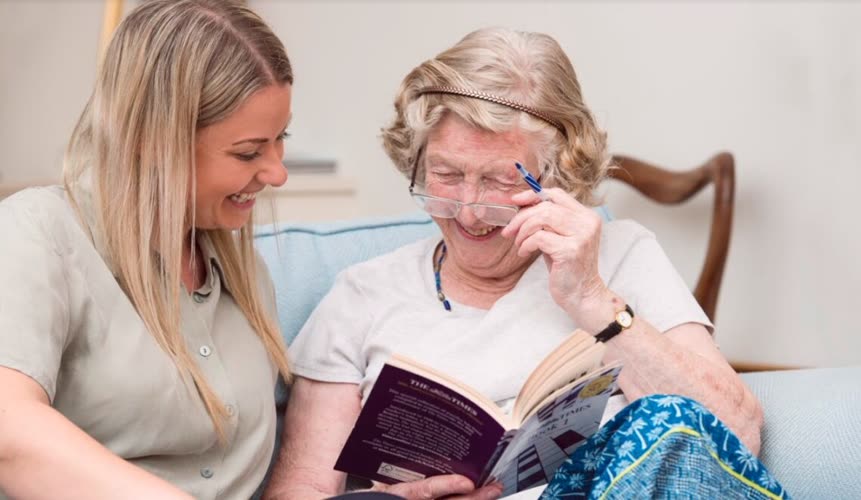
Familiar surroundings matter more with age
Adults with Down's syndrome have a higher risk of early-onset memory changes. Staying in a known home with a consistent carer reduces the confusion that a move can cause.
✧ Our services
Adults with Down's syndrome can live full, independent lives with the right support. A live-in carer helps with daily living, health and community life, keeps routines steady, and adapts as needs change with age.

Down's syndrome is a genetic condition caused by an extra copy of chromosome 21. People with Down's syndrome have some level of learning disability, and some have associated health conditions, such as heart problems, thyroid conditions, hearing and sight difficulties. There are around 47,000 people with Down's syndrome in the UK, according to the Down's Syndrome Association, and life expectancy has risen dramatically, so many now live into their sixties and beyond.
Down's syndrome care at home supports an adult to live as independently as possible, in their own home or the family home, with a carer who helps where needed and encourages them to do as much as they can.
People with Down's syndrome have a much higher risk of developing Alzheimer's disease, and at a younger age than the general population, often in their fifties. Early signs can be subtle: changes in personality or behaviour, loss of skills, or new difficulties with familiar tasks, rather than obvious memory loss. A carer who knows the person well is often the first to notice. We match carers with experience of both learning disability and dementia, and care can adapt as needs change, so the person can stay at home in familiar surroundings. See our dementia care page.
Many adults with Down's syndrome live with their parents well into adulthood. When parents become frail or unwell, families face difficult decisions. Live-in care can let the adult stay in the family home, sometimes supporting a parent at the same time, or help them move into their own home with continuity of support. We are happy to help families plan ahead before a crisis.
Live-in care starts from £1,200 a week, or £1,300 for more complex needs. Funding usually comes from the council after a needs assessment, often as direct payments or a personal budget, together with PIP. NHS Continuing Healthcare may apply where health needs are complex. See our funding guide.
People with Down's syndrome are more likely to have certain health conditions, some of which can be missed because symptoms are attributed to the syndrome itself. Carers help make sure the following are checked regularly:
Adults with a learning disability are entitled to an annual health check from their GP, which is an ideal time to review all of these.
Because dementia often starts earlier in people with Down's syndrome, families and carers need to know what to look for. Early changes may include losing skills the person had, such as dressing or cooking; changes in personality or behaviour; withdrawal from activities they enjoyed; new difficulty with familiar routes; or, sometimes, new seizures in later life. Other causes, such as thyroid problems, hearing loss or depression, can look similar and are treatable, so a GP review is the first step. Keeping a record of the person's usual abilities, sometimes called a baseline assessment, makes changes easier to spot.
For adults with Down's syndrome, a good life looks much like anyone else's: a home, people who care about them, things to do, and a say in their own life. Carers support this by encouraging independence in daily tasks, supporting work, college or day activities, helping maintain friendships and relationships, and making sure the person is involved in decisions about their care. Clear communication, visual supports and patience help the person understand and take part.
Many families of adults with Down's syndrome worry about what will happen when parents can no longer provide care. Planning ahead helps: involving the person in conversations about where and how they want to live, arranging a needs assessment from adult social care, considering who will manage money and decisions if needed, and exploring options such as live-in care in the family home. Our team is happy to talk families through these options before any crisis arises.
Change can be especially hard for people with Down's syndrome, who often rely on familiar routines, places and people. Moving house, a parent becoming ill or a bereavement can cause great distress, which may show as withdrawal, changes in behaviour or loss of skills. Support helps: preparing the person for changes in advance where possible, using simple language and pictures to explain what is happening, keeping as much of the routine as possible, and allowing them to grieve in their own way. Consistent carers who already know the person are a source of stability at these times.
Regular activity and a balanced diet are important for everyone, and adults with Down's syndrome can be at higher risk of weight gain and related health problems. Carers encourage activities the person enjoys, such as walking, swimming, dancing or sport, and support healthy eating through shopping and cooking together, in a way that involves the person rather than imposing rules. Being active also supports mood, sleep and social contact.
Why families choose it
Adults with Down's syndrome have a higher risk of early-onset memory changes. Staying in a known home with a consistent carer reduces the confusion that a move can cause.
Thyroid function, hearing, heart conditions and mobility can all need watching. The same carer every day notices changes early and flags them to the GP.
Many parent carers are older themselves. Live-in care shares the load without removing their loved one from the home and routine they know.
A predictable daily rhythm — meals, activities, rest — kept exactly as the person prefers it, not to a facility timetable.
Rather than shared staffing in a residential or supported living setting, a live-in carer is there for one person, all day.
Is it right for us?
If one of these sounds familiar, Down's syndrome care at home is worth a conversation.
The most common reason families reach out. Live-in care lets their son or daughter stay at home rather than move into residential care.
Adults with Down's syndrome are at higher risk of Alzheimer's-type changes from their 40s onward. A consistent carer notices small shifts sooner than intermittent visitors would.
Congenital heart conditions are common in Down's syndrome. Recovery at home, with support, is often preferable to a longer hospital stay or a care home.
Parents often want to arrange care while they are still able to be involved in choosing who provides it, rather than leaving decisions to a sudden emergency.
As physical needs increase, occasional support from family or visiting carers can stop being enough for a safe daily routine.
What a carer does
Every care plan is built from these, weighted to whatever matters most in your household.
A predictable day — washing, dressing, meals and activities — kept consistent by the same carer.
Support with thyroid, cardiac and memory-related changes commonly associated with Down's syndrome, working alongside the GP.
Someone to talk to, do activities with, and accompany to family visits, clubs or community groups.
Light housework, laundry and meal preparation, so daily life at home carries on as it always has.
Related services
Live-in care is not one fixed thing. These are the variations families most often need — and we will tell you which one actually fits.
For people who need attention repeatedly through the night. Covers waking nights and, where nights are consistently broken, two carers in rotation.
A professional steps in so a family carer can rest, from a few days to several weeks. Also the easiest way to try live-in care before committing.
For a hospital discharge, a fall, or a carer suddenly unable to continue. We can often have someone in place within 24 to 48 hours.
Cover through the night only, where days are manageable but nights are not. Useful after a hospital stay or while a diagnosis settles.
Carers experienced in memory loss, sundowning and changes in behaviour. Familiar rooms and one consistent face matter more here than anywhere.
Comfort-focused support at home, working alongside district nurses and the GP so symptom control and dignity come first.
Support for the final months, weeks or days at home, for the person and for the family around them.
Where the need is company and daily structure rather than personal care. Often the first step, before anything more is required.
What you get
Being straight about the boundaries saves everyone a difficult conversation later.
Compared honestly
The three realistic options, side by side. We will tell you if one of the others suits you better.
| Live-in care | Residential care home | Visiting care | |
|---|---|---|---|
| Typical weekly cost, one person | From £1,200 | £1,100 – £1,600 | £300 – £900 |
| Typical weekly cost, a couple | From £1,200 (one carer) | £2,200 – £3,200 (two places) | Varies by hours |
| Staff-to-person ratio | One-to-one | Shared across residents | One-to-one, but only during visits |
| Same carer each day | Yes | No — shift rota | Rarely |
| Stay in your own home | Yes | No | Yes |
| Overnight cover | Yes | Yes | No — unless booked separately |
| Couples stay together | Yes | Often not possible | Yes |
| Pets can stay | Yes | Almost never | Yes |
| Visitors any time | Yes | Visiting hours | Yes |
Care home figures are typical UK ranges for 2026 and vary considerably by region and by whether nursing care is included. We quote our own prices exactly; always confirm a care home's fees directly with them.
Our carers
The single biggest worry families raise, and rightly. You choose the carer from matched profiles, and you can speak to them by video call before deciding anything.

Our carers
Our carers are spread across the UK, supported by regional care managers. Every one is interviewed in person, enhanced DBS checked and reference-checked before they are ever introduced to a family — and you choose who moves in.
 Refiloe
Live-in carer
Refiloe
Live-in carer
 Brenda
Live-in carer
Brenda
Live-in carer
 Vistorine
Live-in carer
Vistorine
Live-in carer
 Monica
Live-in carer
Monica
Live-in carer
 Patience
Live-in carer
Patience
Live-in carer
 Gladys
Live-in carer
Gladys
Live-in carer
How it works
A friendly, no-obligation call to understand the situation, explain how the care works and give you an estimated weekly cost.
We send profiles of available carers matched to your needs. You can speak to them on a video call before deciding.
Your carer moves in and support starts, with a named care manager checking in regularly to make sure it's working.
Free callback
Leave your number and a care manager will call you back — usually within an hour, and always free.
Or call us now on 0800 368 8558 Lines open 8am–10pm, seven days a week
Common questions
What families ask us before arranging care.
Not seeing your question?
Our care managers answer these every day. A no-obligation call takes about ten minutes.
0800 368 8558Lines open 8am–10pm, seven days a week See all questionsLive-in care starts from £1,200 a week, or £1,300 a week for more complex needs such as Down's syndrome with dementia.
Yes. People with Down's syndrome have a much higher risk of Alzheimer's disease, often from their fifties. Early signs are often changes in behaviour or skills rather than memory.
Yes. Carers support daily living skills such as cooking, shopping and budgeting, encouraging independence rather than doing everything for the person.
Live-in care can let the adult stay in the family home or move into their own home with continuity of support. We help families plan ahead.
Often, yes. Direct payments or a personal budget from the council can be used to arrange live-in care. Ask your social worker.
We can match carers who use Makaton or visual communication, and brief every carer on how the person communicates.
Regular thyroid, hearing, eyesight and heart checks, plus attention to sleep and weight. Adults with a learning disability are entitled to an annual GP health check, which is a good time to review these.
Loss of skills, changes in personality or behaviour, withdrawal from activities, difficulty with familiar routes, or new seizures in later life. Treatable causes such as thyroid problems should be checked first.
A record of the person's usual abilities and behaviour, made while they are well. It makes later changes, such as early signs of dementia, easier to recognise.
Yes. Carers can support travel, routines and preparation for work, college or day activities, helping the person take part in community life as independently as possible.
Transparent pricing
One weekly fee covering the agreed care plan. No hidden charges for everyday care.
Read next


Related care
Learning disabilities are neurological disorders that affect one or more parts of the brain. They can make it difficult for someone to process information and learn new skills. And, sometimes you will need to consider professional care at home for this person.
Our dementia care at home service provides one-to-one support at home from a trained, DBS-checked carer — matched to your family's needs, routine and personality.
Disability care is specialised home care designed to support individuals with physical, learning, sensory, or complex disabilities. This type of care focuses on assisting with daily activities, mobility, personal care, and emotional well-being while promoting independence and quality of life.
cerebral palsy private care is a condition that impacts muscle control and movement. It is a lifelong disability that can be challenging for the person who has it, their care providers, live in care, and their family members.
Our companionship care at home service provides one-to-one support at home from a trained, DBS-checked carer — matched to your family's needs, routine and personality.
Near you
Local pages cover how care is regulated and funded where your relative lives.
Where we work
We arrange care in 850+ towns and cities. Choose your area for local pricing, funding and how care is regulated where you live.
Can’t see your area? Call 0800 368 8558 — we almost certainly still cover it.
Free, no-obligation call back
Answer 5 quick questions and one of our care managers will call you back to talk through the options and give you a clear weekly price.
Prefer to talk now? 0800 368 8558 Lines open 8am–10pm, seven days a week
One of our care managers will call you back shortly. If it's urgent, call us now on 0800 368 8558 .