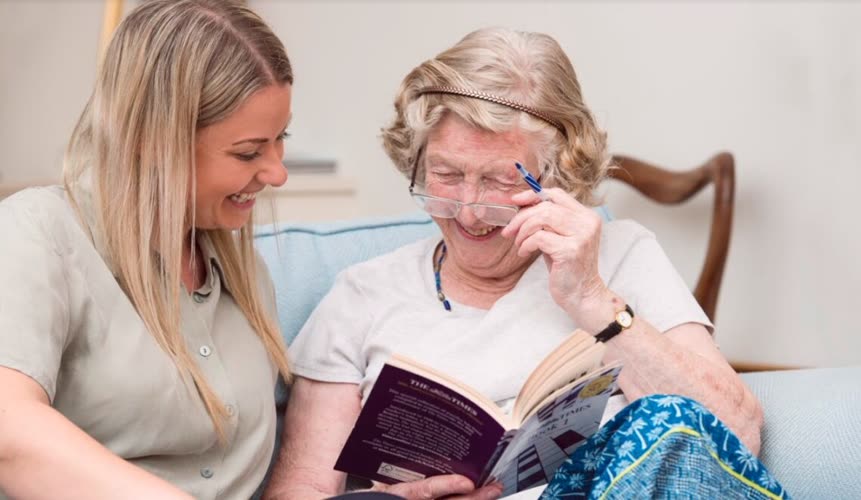
Breathlessness is spotted and managed early
A carer present all day notices a change in breathing, colour or energy long before it becomes an emergency hospital admission.
✧ Our services
COPD makes breathing hard work, and everyday tasks can become exhausting. A live-in COPD carer takes on the load, helps with inhalers and oxygen routines, and spots flare-ups early so you can stay well at home.
-care.jpg.webp)
Chronic obstructive pulmonary disease (COPD) is the name for a group of lung conditions, including emphysema and chronic bronchitis, that make it difficult to breathe out. It causes breathlessness, a persistent cough and chest infections, and it tends to get worse over time. Around 1.2 million people in the UK have diagnosed COPD, according to Asthma + Lung UK.
COPD care at home supports someone to manage their breathing and daily life in their own home. With live-in care, a carer is there around the clock, which matters because breathlessness and anxiety are often worst at night.
A flare-up, or exacerbation, is when symptoms suddenly get worse: more breathless, more coughing, or a change in the colour or amount of phlegm. Many people have a COPD self-management plan and sometimes a "rescue pack" of antibiotics and steroids from the GP. A carer who knows the person's normal can spot a flare-up early, follow the plan and contact the GP or respiratory team promptly, which can prevent a hospital admission. Severe breathlessness, blue lips or confusion always need 999.
Before care starts, we build a care plan around the person's breathing: what they can do independently, when they need help, their inhalers and oxygen, their self-management plan, and the contacts for their respiratory nurse and GP. The plan is reviewed as the condition changes, and more support is added when needed. Seasonal vaccinations and avoiding infections are also part of staying well.
Live-in COPD care starts from £1,200 a week, or £1,300 for more complex needs. Attendance Allowance or PIP, council support after a needs assessment, and NHS Continuing Healthcare for advanced COPD with complex needs may all help. See our funding guide.
Respiratory physiotherapists and pulmonary rehabilitation teams teach techniques that can make breathlessness easier to manage. Carers encourage them day to day:
A calm, reassuring presence during a breathless episode is also important, as panic makes breathlessness worse.
Pulmonary rehabilitation is a programme of exercise and education for people with lung conditions. It is one of the most effective treatments for COPD, helping people breathe more easily, walk further and feel more confident. Yet many people who are offered it do not attend, often because getting there is difficult. A live-in carer can help with transport, encourage the exercises between sessions, and help keep up the gains once the programme ends.
Chest infections are the most common trigger for COPD flare-ups, and they are more frequent in winter. Practical steps help: making sure flu, COVID-19 and pneumococcal vaccinations are up to date as advised; keeping the home warm, ideally at least 18°C in living areas; washing hands regularly and avoiding people with colds where possible; and having a plan, and ideally a rescue pack, agreed with the GP for when symptoms worsen. A carer helps keep all of these on track.
As COPD progresses, flare-ups may become more frequent and breathlessness may limit most activities. It is helpful to talk with the GP or respiratory team about what matters most to the person, where they would prefer to be cared for, and how to manage future flare-ups, including whether they would want hospital admission. Palliative care support can help with symptoms such as breathlessness and anxiety. Live-in care supports people with advanced COPD to stay comfortable at home, following the plan they have agreed.
People with COPD use more energy just to breathe, and breathlessness can make eating tiring, so unintentional weight loss is common and can weaken the muscles used for breathing. Helpful approaches include small, frequent meals and snacks, nutritious drinks between meals, resting before eating, sitting upright, and choosing foods that are easy to chew. Some people have the opposite problem, and carrying extra weight makes breathing harder. A dietitian can give personal advice, and a carer can put it into practice with appetising meals.
Breathlessness is frightening, and fear makes breathing harder, which increases fear further. Breaking this cycle is an important part of COPD care. Breathing techniques, a calm and reassuring presence, a hand-held fan, a position of ease and a familiar plan for what to do during a breathless episode all help. If anxiety is severe or constant, the GP or respiratory team can offer further support, including talking therapies. Knowing someone is in the house at night can itself ease anxiety considerably.
Stopping smoking is the single most effective way to slow the progression of COPD, at any stage. Free NHS stop smoking services offer support and treatment that greatly improve the chances of quitting, and a carer can support the person through the process.
Why families choose it
A carer present all day notices a change in breathing, colour or energy long before it becomes an emergency hospital admission.
Managing oxygen therapy, nebulisers and multiple inhaler devices correctly is far more reliable with the same trained carer supporting it daily.
Familiar surroundings, steady symptom monitoring and someone present around the clock is what keeps COPD flare-ups from turning into A&E visits.
Washing, dressing and moving around the home can happen slowly and without panic, rather than being rushed through breathlessly.
A carer who understands COPD knows when quiet company is what's needed, rather than pushing conversation when breath is short.
Is it right for us?
If one of these sounds familiar, COPD care at home is worth a conversation.
When getting dressed or making a cup of tea leaves someone gasping for breath, that's usually the point live-in care becomes necessary rather than optional.
Frequent exacerbations often mean the person needs daily monitoring at home, not just periodic visits from a district nurse.
Getting used to portable oxygen, tubing and equipment at home is safer and less frightening with someone experienced on hand.
COPD can deteriorate quickly. Families often want someone qualified in the house at all times, not just able to respond if called.
As lung function declines with age, families often reach a point where visiting carers can no longer cover what's needed.
What a carer does
Every care plan is built from these, weighted to whatever matters most in your household.
Personal care and daily tasks paced gently to breathing, without rushing or causing avoidable breathlessness.
Close attention to breathing, colour and energy, catching the early signs of a flare-up before it becomes a hospital admission.
Quiet, reassuring company that understands when talking is difficult, and stays close during breathless or anxious moments.
Housework, shopping and meal preparation handled at home, removing physical exertion that would otherwise trigger breathlessness.
Related services
Live-in care is not one fixed thing. These are the variations families most often need — and we will tell you which one actually fits.
For people who need attention repeatedly through the night. Covers waking nights and, where nights are consistently broken, two carers in rotation.
A professional steps in so a family carer can rest, from a few days to several weeks. Also the easiest way to try live-in care before committing.
For a hospital discharge, a fall, or a carer suddenly unable to continue. We can often have someone in place within 24 to 48 hours.
Cover through the night only, where days are manageable but nights are not. Useful after a hospital stay or while a diagnosis settles.
Carers experienced in memory loss, sundowning and changes in behaviour. Familiar rooms and one consistent face matter more here than anywhere.
Comfort-focused support at home, working alongside district nurses and the GP so symptom control and dignity come first.
Support for the final months, weeks or days at home, for the person and for the family around them.
Where the need is company and daily structure rather than personal care. Often the first step, before anything more is required.
What you get
Being straight about the boundaries saves everyone a difficult conversation later.
Compared honestly
The three realistic options, side by side. We will tell you if one of the others suits you better.
| Live-in care | Residential care home | Visiting care | |
|---|---|---|---|
| Typical weekly cost, one person | From £1,200 | £1,100 – £1,600 | £300 – £900 |
| Typical weekly cost, a couple | From £1,200 (one carer) | £2,200 – £3,200 (two places) | Varies by hours |
| Staff-to-person ratio | One-to-one | Shared across residents | One-to-one, but only during visits |
| Same carer each day | Yes | No — shift rota | Rarely |
| Stay in your own home | Yes | No | Yes |
| Overnight cover | Yes | Yes | No — unless booked separately |
| Couples stay together | Yes | Often not possible | Yes |
| Pets can stay | Yes | Almost never | Yes |
| Visitors any time | Yes | Visiting hours | Yes |
Care home figures are typical UK ranges for 2026 and vary considerably by region and by whether nursing care is included. We quote our own prices exactly; always confirm a care home's fees directly with them.
Our carers
The single biggest worry families raise, and rightly. You choose the carer from matched profiles, and you can speak to them by video call before deciding anything.


Our carers
Our carers are spread across the UK, supported by regional care managers. Every one is interviewed in person, enhanced DBS checked and reference-checked before they are ever introduced to a family — and you choose who moves in.
 Patience
Live-in carer
Patience
Live-in carer
 Brenda
Live-in carer
Brenda
Live-in carer
 Refiloe
Live-in carer
Refiloe
Live-in carer
 Gladys
Live-in carer
Gladys
Live-in carer
 Monica
Live-in carer
Monica
Live-in carer
 Vistorine
Live-in carer
Vistorine
Live-in carer
How it works
A friendly, no-obligation call to understand the situation, explain how the care works and give you an estimated weekly cost.
We send profiles of available carers matched to your needs. You can speak to them on a video call before deciding.
Your carer moves in and support starts, with a named care manager checking in regularly to make sure it's working.
Free callback
Leave your number and a care manager will call you back — usually within an hour, and always free.
Or call us now on 0800 368 8558 Lines open 8am–10pm, seven days a week
Common questions
What families ask us before arranging care.
Not seeing your question?
Our care managers answer these every day. A no-obligation call takes about ten minutes.
0800 368 8558Lines open 8am–10pm, seven days a week See all questionsLive-in COPD care starts from £1,200 a week, or £1,300 a week for more complex needs such as frequent night-time breathlessness.
Yes. Carers help with oxygen routines as prescribed and keep the home oxygen-safe, including no smoking, no naked flames and safe storage of cylinders.
The carer follows the COPD self-management plan, including any rescue pack, and contacts the GP or respiratory team. Severe breathlessness, blue lips or confusion need 999.
A carer who sees the person every day can spot flare-ups early and act on them quickly, which often helps avoid a hospital stay.
Yes. Alongside the respiratory and palliative teams, live-in care helps people with advanced COPD stay comfortable and supported at home.
Attendance Allowance or PIP, council funding after a needs assessment, and NHS Continuing Healthcare for complex, primarily health-related needs.
Breathing in through the nose and out slowly through pursed lips, as if blowing out a candle. It helps empty the lungs and can ease breathlessness. Respiratory physiotherapists teach it, and carers encourage it daily.
A programme of exercise and education for people with lung conditions such as COPD. It helps people breathe more easily and walk further. A carer can help with transport and exercises between sessions.
Keep vaccinations up to date as advised, keep the home warm, wash hands often, avoid people with colds where possible, and have a plan agreed with the GP for when symptoms worsen.
Leaning forward with forearms resting on the knees or a table often makes breathing easier during a breathless episode. The respiratory team can suggest positions that suit the individual.
Transparent pricing
One weekly fee covering the agreed care plan. No hidden charges for everyday care.
Read next


Related care
The lifestyle, which includes diet and exercise patterns, plays the most important role in developing, deteriorating, and treating the disease. You may feel like it is easy to manage it all by yourself, but in fact, it is not.
24 hour live-in care means someone is in the home around the clock — including through the night, when help is most often needed and least often available.
Palliative Care at Home is a step taken to improve the quality and wellness of people's lives, including adults, children, and families that are faced with problems that may be a threat to their lives. Caring for these people demands their loved ones and relatives to remain closer to them all the time to provide them with the necessary care. Shouldering these responsibilities can very, very time-consuming and tedious. Due to this, you may have some of your activities cut short to concentrate on providing the care they require.
Overnight home care means that a trained carer stays at the individual’s home overnight to assist with any situation that may arise. The caregiving staff member seamlessly facilitates daily routine which continues during the night as well.
Our elderly care at home service provides one-to-one support at home from a trained, DBS-checked carer — matched to your family's needs, routine and personality.
Near you
Local pages cover how care is regulated and funded where your relative lives.
Where we work
We arrange care in 850+ towns and cities. Choose your area for local pricing, funding and how care is regulated where you live.
Can’t see your area? Call 0800 368 8558 — we almost certainly still cover it.
Free, no-obligation call back
Answer 5 quick questions and one of our care managers will call you back to talk through the options and give you a clear weekly price.
Prefer to talk now? 0800 368 8558 Lines open 8am–10pm, seven days a week
One of our care managers will call you back shortly. If it's urgent, call us now on 0800 368 8558 .