
Live-in care for couples: staying together at home
When one partner needs more support than the other, live-in care can often keep a couple together at home under a single carer, rather than being separated.

One of the hardest parts of arranging care for an older couple is that their needs are rarely identical. One partner might be managing well but simply can't keep up with looking after the other; the other might need considerable personal care. It's a situation that a lot of care options handle badly — often by splitting a couple up, sometimes into entirely separate buildings, at exactly the point in life when staying together matters most.
How it usually works
A single live-in carer can often support both partners under one care plan, tailored so that each person gets what they specifically need — more hands-on personal care for one, perhaps just companionship, meal preparation and light support for the other. Rather than a fixed package applied to both people equally, it's built around the actual difference in what each of them needs, which is generally impossible to arrange as cleanly in a residential setting.
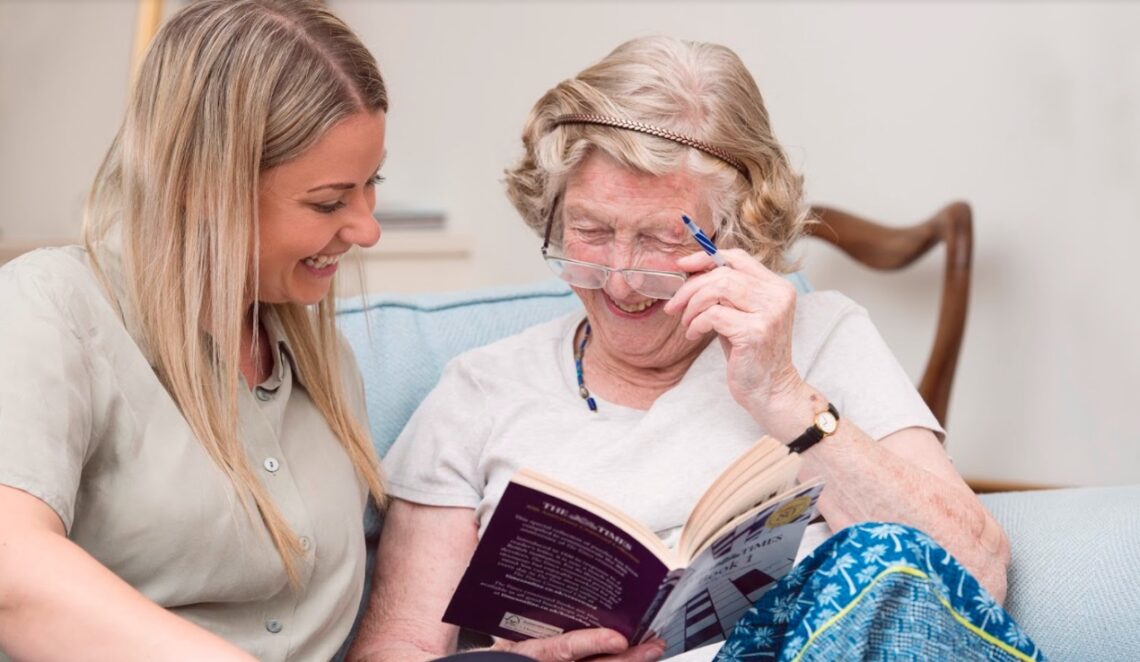
Why this matters beyond the practical side
Decades together doesn't stop mattering just because one partner's health has changed. Being able to sleep in the same room, share meals, and keep the small daily routines that make up a long marriage tends to matter enormously — more, often, than families initially expect when they start looking into care options. Separation, even when it's clearly the safer option on paper, can be genuinely hard on both partners in ways that show up in mood and wellbeing as much as in physical health.
When a couple needs two carers instead of one
Sometimes both partners need a significant level of personal care at the same time, and one carer genuinely can't manage it safely alone — that's a real limit, and it's worth being honest about rather than stretching an arrangement too thin. In that situation, our Advanced plan brings in two carers working in rotation around the clock, still under one household, still together, just with more support in place. It costs more than a single-carer arrangement, but it's still typically better value than two separate care home placements would be.

What it costs compared to the alternative
This is where the value becomes clearest. A care home charges per resident, so a couple with different needs usually means two separate fees, and sometimes two separate homes entirely if one partner's needs are more complex than the other's. Live-in care, by contrast, is priced around the household rather than per person — one carer, one fee, supporting two people. It's genuinely one of the situations where live-in care tends to work out better value than the alternative, not just a nicer option.
Getting started
Because every couple's situation is different — in needs, in what matters most to them, in what their home can accommodate — this is very much a conversation rather than a fixed package. Our care managers can talk through what a plan built around both of your parents, or you and your partner, might actually look like, with no obligation attached to that first call.
Free callback
Prefer we call you?
Leave your number and a care manager will call you back — usually within an hour, and always free.
- No obligation. A conversation, not a sales call — and never a call centre.
- A real care manager. Someone who arranges care every day, who can answer properly.
- Just two details. Your name and number — we don’t need an email address.
Or call us now on 0800 368 8558 Lines open 8am–10pm, seven days a week
Common questions
Questions families ask us most
The things people search for before they call us — answered plainly.
Not seeing your question?
Our care managers answer these every day. A no-obligation call takes about ten minutes.
0800 368 8558Lines open 8am–10pm, seven days a week See all questionsCan one carer really look after two people with different needs?
Often, yes — the care plan is built around what each person specifically needs, so one partner might receive more hands-on personal care while the other gets lighter support. Where both partners need significant personal care at the same time, a two-carer Advanced plan may be a better fit.
Is live-in care for couples more expensive than for one person?
It costs more than care for one person, since the carer is supporting two people, but it's typically better value than a care home, which usually charges two separate fees for a couple.
What if one partner's needs increase over time?
The care plan can be adjusted, including moving to a two-carer Advanced plan if needed. It's one of the advantages of live-in care being built around your household rather than a fixed facility.
Related
You might also want to read
Next steps